Showing posts with label free trade. Show all posts

Sunday, February 1, 2009

Obama facing dilemma over protectionism

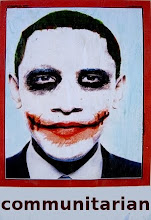
Here's a neat twist. Obama is being attacked in the left wing press for the Patriot Employers Act. Is it possible that American Democrats have a plan to subvert our free trade agreements with Canada and Australia? (Will this lead to a "stronger" contract/court of law in future agreements?) The Act includes using American made steel for the big public works programs Obama is planning. What could be the purpose of that for people openly committed to communitarian principles?

How likely is it that Obama is really a protectionist? Didn't Putin just warn the world against this very thing in his speech at the World Economic Forum? What is protectionism in the US? Who does it protect? How did economist Friedrich List describe it in 1846? Is there any remnant of 19th century protectionism in this Act? And as horrible as this sounds, didn't Hitler also combine his socialism/fascism with protectionism and call it National Socialism? I'm thinking the idea of a protected local economy is a great sell to the general public anywhere, especially to ones who thinks it means local goods and services will benefit from local made and local hire conditions. I've never met an Alaskan who wasn't happy with the local hiring laws up here. I think this Act will contribute to Obama's image in the US, and give the internationalists a great topic for their circular academic debates.
(9) Obama facing dilemma over protectionism

http://www.google.com/hostednews/ap/article/ALeqM5i4s37Co-txUki3IUqyBr7vLSbr3AD96291VO0

Obama facing dilemma over protectionism

By DESMOND BUTLER

Associated Press January 31, 2009

WASHINGTON (AP) — Protection language in the stimulus bill presents President Barack Obama with a dilemma: Backing the provisions could set off a trade war, but opposing them could mean a backlash from his supporters.

The "buy American" provisions would require major public works projects to favor U.S. steel, iron and manufacturing over imports.

U.S. allies and trading partners warn that favoring U.S. companies would breach Washington's trade commitments and could set off tit-for-tat countermeasures around the world.

The two largest U.S. trading partners have spoken out. On Thursday, Canadian Prime Minister Stephen Harper expressed concern and the European Union warned that it would not "stand idly by" if such measures were passed. On Friday, Brazil's president Luiz Inacio Lula da Silva also made critical comments.

In November, world leaders who gathered in Washington for the G-20 summit to consider how to help the global economy pledged to avoid protectionism. But since taking office Jan. 20, Obama has said little on trade and has yet to nominate a trade representative. While campaigning, he argued that the Bush administration's strong support of free trade agreements should be moderated by including environmental and labor protections.

"The jury is out on how this administration is going on trade policy," said Steven Schrage, an international business analyst at the Center for Strategic and International Studies. "This will be a key test."

Asked about the protective provisions Friday, White House press secretary Robert Gibbs would say only that the administration was reviewing them.

The provisions are likely to find support among Americans outraged that money from a stimulus package likely to top $800 billion could go to foreign competitors of U.S. companies.

"I believe that when taxpayer dollars are used, they should support the things produced here at home," Sen. Byron Dorgan, D-N.D., author of one of the provisions, said in a statement.

Many analysts say the measures reflect the interests of small sectors over the larger economy, which could suffer from reduced trade and higher steel prices.

"The result, according to my calculations, is that the U.S. will lose more jobs than it will gain," said Gary Hufbauer, an economist with the Peterson Institute for International Economics, a Washington think tank. "We are going to poison the wells of world commerce if we do this."

The provisions are in a bill already approved by the House and a different version under consideration in the Senate. The Senate version states that none of the funds from the stimulus may be used for a project "unless all of the iron, steel and manufactured goods used in the projects are produced in the United States." The House version leaves out manufactured goods.

Obama, who has argued that stimulus measures are urgent, is unlikely to block passage of any bill approved by the Congress. But he could press lawmakers to remove the protectionist measures before it is passed.

"The problem is that Obama has not said anything yet," said Dan Ikenson of the libertarian Cato Institute.

Both versions of the bill include language that would allow the president to waive the protectionist measures if he decides that would be in the economic interests of the United States. But passage of the measures could in itself unnerve trading partners and encourage other countries to take similar protective action.
Hosted by

Copyright © 2009 The Associated Press. All rights reserved.

Tuesday, March 4, 2008

Africans reject EU Trade demands!

In Africa, the governments appear to be acting in the best interests of their citizens. Compare this report with my post yesterday about Barack Obama and his Global Poverty Bill which claims to commit to helping reduce poverty via sustainable development coupled with the U.S. 's Transatlantic Policy Network which plans to reduce trade barriers between the U.S. and the E.U.

Too bad so many of these African nations can't see through the Hegelian scam as well. This came off Peter Meyer's elist:
Forwarded from: Global Trade Watch <info@tradewatchoz.org>
Date: Tue, 4 Mar 2008 17:33:16 +1100

* Africa takes a stand against Europe’s unequal economic partnership agreements (EPA's)

Food First ( www.foodfirst.org ) reports: "Times may be changing in Africa. Europe is no longer free to impose unfair trade agreements to the detriment of African farmers. At the second EU-Africa Summit in Lisbon in December African nations united against the EU’s push for trade liberalization and bilateral economic agreements. The EU’s 27 countries were asking African, Caribbean, and Pacific countries to permit EU goods and services to enter their domestic markets duty-free with a December 31, 2007 deadline for the new trade agreements.

Instead, African governments resoundingly voted no, forcing the European Commission into negotiations that are likely to resume in 2008. President Abdoulaye Wade of Senegal emphatically refused to sign saying “We are not talking any more about EPA’s. We have rejected them.” President Thamo Mbeki of South Africa and Namibia supported Wade in deciding not to sign. This is a turning point for Africa, with African nations rejecting European domination and colonialist policies. The mobilized strength of social movements and trade union organizations in Sub-Saharan Africa also contributed to the collapse of the Summit.

Breaking with the European Commission, French President Nicolas Sarkozy stood behind the African countries that opposed unfair agreements. All in all, only 15 of the 76 poor countries involved in the discussions have signed EPA’s with Europe. Most African leaders fear that the EPA’s will flood their markets with cheap European goods, depriving them of duty revenue, while destroying local businesses and agriculture. Many also fear the EU’s strategy of single country deals that parallel the US’ inequitable trade agreements with Latin American nations."
Now what, if anything, does this have to do with the UN Law of the Sea Treaty? Here's an introduction from wikipedia, which sucks as a source sometimes but it's always a good place to start if you know nothing about the topic. For instance, Wiki has a link to http://www.burneylawfirm.com/international_law_primer.htm which has a fabulous page dedicated to the topic. I'm one of those who don't know anything about the Law of the Sea Treaty and for this I was chastised, more than once, in responses to my articles about communitarian law. I've got other pressing commitments but I will study this asap.
United States non-ratification

The United States strongly objected to the provisions of Part XI of the Convention on several grounds, saying that the treaty is unfavorable to America's economy and security. The US felt that the provisions of the treaty were not free-market friendly and were designed to favor the economic systems of the Communist states. The US also felt that the provisions might result in the ISA becoming a bloated and expensive bureaucracy due to a combination of large revenues and insufficient control over what the revenues could be used for.

Due to Part XI, the US refused to ratify the UNCLOS, although it expressed agreement with the remaining provisions of the Convention. Even though the United States is not a party to the treaty, it considers many of the remaining provisions as binding as customary international law. {Explained here: http://en.wikipedia.org/wiki/Customary_international_law

[edit] Revision of the LOS Convention

From 1983 to 1990, the United States accepted all but Part XI as customary international law, while attempting to establish an alternative regime for exploitation of the minerals of the deep seabed. An agreement was made with other seabed mining nations and licenses were granted to four international consortia. Concurrently, the Preparatory Commission was established to prepare for the eventual coming into force of the Convention-recognized claims by applicants, sponsored by signatories of the Convention. Overlaps between the two groups were resolved, but a decline in the demand for minerals from the seabed made the seabed regime significantly less relevant. In addition, the decline of Socialism and the fall of Communism in the late 1980s had removed much of the support for some of the more contentious Part XI provisions.

In 1990, consultations were begun between signatories and non-signatories (including the United States) over the possibility of modifying the Convention to allow the industrialized countries to join the Convention. The resulting 1994 Agreement on Implementation was adopted as a binding international Convention. It mandated that key articles, including those on limitation of seabed production and mandatory technology transfer, would not be applied, that the United States, if it became a member, would be guaranteed a seat on the Council of the International Seabed Authority, and finally, that voting would be done in groups, with each group able to block decisions on substantive matters. The 1994 Agreement also established a Finance Committee that would originate the financial decisions of the Authority, to which the largest donors would automatically be members and in which decisions would be made by consensus.

[edit] Debate

In the United States there is vigorous debate over the ratification of the treaty, with criticism coming mainly from political conservatives who consider involvement in some international organizations and treaties as detrimental to US national interests. A group of Republican senators, led by Jim Inhofe of Oklahoma, has blocked American ratification of the Convention, claiming that it would impinge on US sovereignty. The Bush administration, a majority of the United States Senate, and the Pentagon favor ratification. In addition, various special interests including scientific and international legal scholars, and mining and environmentalist groups have also expressed support.
http://en.wikipedia.org/wiki/United_Nations_Convention_on_the_Law_of_the_Sea

http://en.wikipedia.org/wiki/Exclusive_economic_zones


http://en.wikipedia.org/wiki/Magnuson-Stevens_Fisheries_Conservation_and_Management_Act_of_1976

Here's Senator Inhofe's speech on the Law of the Sea Treaty last October:
http://inhofe.senate.gov/public/index.cfm?FuseAction=PressRoom.Speeches&ContentRecord_id=ae6b61e3-802a-23ad-431c-19fcc771af03&Region_id=&Issue_id=4afd45b5-e2e8-be06-d58b-91d455490bcc

Inhofe appears to be a model Republican who supports the War on Iraq, and other lovely projects like turning Yucca Mountain outside Vegas into a nuclear waste site. Inhofe is painted as "out of touch fringe group" by Democrats. (http://www.dscc.org/news_item?news_item_KEY=3914) "Sen Barbara Boxer, D-Calif., the chairman of the Senate Environment and Public Works Committee, painted Inhofe, R-Tulsa, as part of an out-of-touch fringe group that is ignoring the advice of the world's leading scientists and experts on climate change."

What's the odds Inhofe is a dialectical player, just like Boxer? Can't reach a synthesis without a left or a right. Somebody has to act out each "side." The problem is when people like me are forced to choose one or the other. I don't like the far right any more than I like the far left. It irks the hell out of me that the only elected officials who oppose the UN are right wing Christians (or Birchers) who can be labled "fringe" and discounted for their voting records in other areas like war and welfare. It makes it appear as if my anti UN sentiment is based on right wing ideology. Then there's the whole trap that if I can't identify with a side then I am a communitarian by default. There is NO place in the debates for anti communitarians.