To everyone who pre-ordered our e-book, we're sending you the first completed PDFs files tonight.
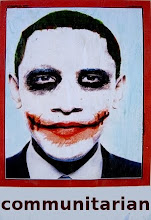
This came today and looks so important to our awareness I'm posting the entire forward. From Peter Myers, one of my favorite Australian NWO researchers, who's also somewhat of a communitarian thinker. He publishes whatever I send him but his list has pretty much ignored my arguments against Dictatorial Communitarian Laws. His latest question to me in a private email was about the War on Obesity, which he sees as a fairly good thing because right now there are proposed new laws that target the big fast food giants accused of causing obesity. Peter thinks corporations should be held accountable for contributing to our poor health. These are the kind of arguments the dialectic games established for us. I want to debate the final solution to Marx's use of the dialectic, which is Communitarianism, but everyone else wants to keep the debate in the "sides." I'm still working out a counter-argument that gets me out of the corner debating any of the sides keep us in.... it always feels like I'm being "rope-a-doped."
Leftist ideology, like right wing, conservative, religious patriot ideology, eventually leads us all into endorsing the "perfect middle" between the left and the right. Nobody we know wins in the final battle between ideologies. Here's the sad news from the middle-left (the Soros quotes are fantastic!):
This came today and looks so important to our awareness I'm posting the entire forward. From Peter Myers, one of my favorite Australian NWO researchers, who's also somewhat of a communitarian thinker. He publishes whatever I send him but his list has pretty much ignored my arguments against Dictatorial Communitarian Laws. His latest question to me in a private email was about the War on Obesity, which he sees as a fairly good thing because right now there are proposed new laws that target the big fast food giants accused of causing obesity. Peter thinks corporations should be held accountable for contributing to our poor health. These are the kind of arguments the dialectic games established for us. I want to debate the final solution to Marx's use of the dialectic, which is Communitarianism, but everyone else wants to keep the debate in the "sides." I'm still working out a counter-argument that gets me out of the corner debating any of the sides keep us in.... it always feels like I'm being "rope-a-doped."
Leftist ideology, like right wing, conservative, religious patriot ideology, eventually leads us all into endorsing the "perfect middle" between the left and the right. Nobody we know wins in the final battle between ideologies. Here's the sad news from the middle-left (the Soros quotes are fantastic!):
Economic Apocalypse approaches - Reagan budget director David Stockman
(1) Reagan budget director David Stockman warns: US faces sharp economic decline
(2) Economic Apocalypse approaches - David Stockman
(3) Stockman sees a class-rebellion, a new revolution, a war against greed and the wealthy
(4) Class Struggle: minimum wage = $10,000 a year, while executive pay = $10 million a year
(5) Spinning the Unemployment stats in a Collapsing Empire - Paul Craig Roberts
(6) Obama appoints a Banker as Chief of Staff
(7) & (8) Soros wins Globalist of the Year; says New World Order will be dominated by China
(9) Soros says orderly decline of $ will allow replacement by World Currency
(10) Fed rules out a central bank bailout of state and local governments - Ellen Brown
(1) Reagan budget director David Stockman warns: US faces sharp economic decline
From: IHR News news@ihr.org> Date: 15.01.2011 12:00 AM
Exclusive: America has ‘reached the point of no return,' Reagan budget director warns
by Nathan Diebenow -- Raw Story
Monday, January 10th, 2011 -- 8:53 am
http://www.rawstory.com/rs/2011/01/america-has-reached- the-point-of-no-return-reagan- budget-director-warns/
The Obama administration's $78 billion cut to US defense spending is a mere "pin-prick" to a behemoth military-industrial complex that must drastically shrink for the good of the republic, a former Reagan administration budget director recently told Raw Story.
"It amounts to a failed opportunity to recognize that we are now at a historical inflection point at which the time has arrived for a classic post-war demobilization of the entire military establishment," David Stockman said in an exclusive interview.
"The Cold War is long over," he continued. "The wars of occupation are almost over and were complete failures -- Afghanistan and Iraq. The American empire is done. There are no real seriously armed enemies left in the world that can possibly justify an $800 billion national defense and security establishment, including Homeland Security."
Short of that, he suggested, the United States has "reached the point of no return" with its artificial creation of wealth, and will eventually face a sharp economic decline.
Stockman last fall criticized the extension of the Bush tax cuts while the federal government continued to borrow money abroad to pay for its public welfare and warfare programs. His solution to deficit spending -- a huge across-the-board tax increase -- is contrary to the current anti-tax ideology shared among tea party activists as well as fiscal conservatives in the Republican Party.
Stockman, who was appointed by President Ronald Reagan in 1981 to run the Office of Management and Budget, offered two models for the US military's compulsory demobilization: the one after World War I in 1920 and the one after World War II in 1946.
Calling today's military spending running at 5.4 percent of GDP "simply an absurd level that begs for radical contraction and surgery," he said that a "reasonable target" to shrink the defense establishment would be 3 percent of GDP by 2015.
What budget cuts?
Republicans, who were elected to a majority in the House of Representatives on promises to cut government spending, promised to cut $100 billion from the budget in their first year. Relatively few have proposed significant decreases in defense spending, and GOP leadership has outright dismissed the possibility.
Some prominent members of the House GOP caucus have even suggested the sum of their austerity measures could fall to only $30 billion, if that.
Republicans in Congress have instead championed their success in extending President George W. Bush's tax cuts for the wealthiest Americans. The Congressional Research Service reported (PDF) that extending debased tax rates to the wealthy will add an additional $5.08 trillion to the US deficit over the next 10 years.
The Bush-era tax rates that Republicans had set to expire were continued for another two years in a legislative compromise that cleared the way for a series of Democratic legislative victories in Congress. President Obama vowed to press the issue again in 2012.
Among their first actions as the House majority, Republicans also pushed for a repeal of President Obama's health care reform laws, even as the Senate's Democratic majority vowed to block the measure. Repeal of the laws would cost an additional $230 billion, according to the Congressional Budget Office (PDF), and would likely drive the number of uninsured Americans to over 54 million by 2019.
But with the US national debt ballooning past $14 trillion in recent days, even a debasement of the military-industrial complex might be too little, too late.
Some analysts have warned the next debt crisis could be municipal bonds, where a $2 trillion market bubble currently exists. One, who correctly predicted the Citigroup credit crunch, even suggested that over 100 US cities may default in the process.
But very few, if anyone, in Congress, the National Security Council, the State or Defense Departments have even dared to publicly raise the prospect of reducing the military establishment and its spending to offset the national debt, Stockman said.
"Unless you have a profound change in foreign policy, you're not going to have the possibility of a radical change in defense spending. The later follows from the former," he said.
"This is a profound disappointment that there's not even a debate -- a serious debate about dramatic change in our imperialist foreign policy and war-making establishment in this administration -- allegedly the most left-wing administration that we've had in modern time."
"I don't have much hope that what needs to be done will be done until it's finally forced on us by a world bond market crisis, which will happen sooner or later," Stockman added.
The 'Ponzi scheme' of 'artificial prosperity'
Stockman, who described himself as a libertarian during a recent interview with Reason.tv, told Raw Story that the economy got into this mess because of the public and private sectors' addiction to "guns and butter Keynesianism," an economic policy that amounts to a Ponzi scheme that has ballooned since 1990.
"If we see what's going on carefully, we've reached the final unmasking of the Keynesian illusion, that Keynesianism is really nothing but borrowing, stealing from the future to induce consumption today," he said. "There are no multipliers. Every one of these programs we've had from 'cash for clunkers' to housing purchase credits have disappeared as soon as they expired and simple shifted activities in time by a few months."
Stockman explained that before 1980, it took about $1.50 of new borrowing -- public or private -- to generate $1 of GDP growth. By the mid-1990s, it was $2.50 or $3 of borrowing for a $1 of GDP growth. By 2007, before the big collapse and meltdown finally came, $7 of public and private debt was added to the national balance sheet in order to get $1 of GDP growth.
"When you get to the point of $7 of borrowing to get $1 of income, you're obviously on an unsustainable path and pretty close to hitting the wall, which more or less we have," he said.
"So the addicts in Washington are now unfortunately terrified to stop all this borrowing whether it's for guns or butter for fear of the economy will collapse.... That's why we're just at the beginning of solving this massive financial collapse we had in 2008 and not in the process of healthy recovery as some of the pals in the White House or on Capitol Hill or on Wall Street would have you believe."
America's "massive debt-created, artificial prosperity" is unprecedented in history, he continued. The dependence on consumption supported by public and private borrowing, not income, is a new stage for Western Europe as well.
A global public debt crisis was inevitable and likely unstoppable, given the political conditions, Stockman added.
"We've reached a point of no return. The size of the government. The massive size of the deficits and the national debt that has been created. The precedents that have been established for bailouts and intervention in every sector of the economy. The K Street lobbying system which totally dominates the Congress. All of these are very unhealthy developments.
"And I'm not sure how they are going to be reversed or eliminated," he concluded. "It may be a permanent way of life. Then, if it is, it'll be both a corruption of democracy and a serious weakening of the private capitalistic economy."
With additional reporting and editing by Stephen C. Webster.
(2) Economic Apocalypse approaches - David Stockman
http://www.nytimes.com/2010/08/01/opinion/01stockman.html? _r=1
Four Deformations of the Apocalypse
By DAVID STOCKMAN
Published: July 31, 2010
IF there were such a thing as Chapter 11 for politicians, the Republican push to extend the unaffordable Bush tax cuts would amount to a bankruptcy filing. The nation's public debt — if honestly reckoned to include municipal bonds and the $7 trillion of new deficits baked into the cake through 2015 — will soon reach $18 trillion. That's a Greece-scale 120 percent of gross domestic product, and fairly screams out for austerity and sacrifice. It is therefore unseemly for the Senate minority leader, Mitch McConnell, to insist that the nation's wealthiest taxpayers be spared even a three-percentage-point rate increase.
More fundamentally, Mr. McConnell's stand puts the lie to the Republican pretense that its new monetarist and supply-side doctrines are rooted in its traditional financial philosophy. Republicans used to believe that prosperity depended upon the regular balancing of accounts — in government, in international trade, on the ledgers of central banks and in the financial affairs of private households and businesses, too. But the new catechism, as practiced by Republican policymakers for decades now, has amounted to little more than money printing and deficit finance — vulgar Keynesianism robed in the ideological vestments of the prosperous classes.
This approach has not simply made a mockery of traditional party ideals. It has also led to the serial financial bubbles and Wall Street depredations that have crippled our economy. More specifically, the new policy doctrines have caused four great deformations of the national economy, and modern Republicans have turned a blind eye to each one.
The first of these started when the Nixon administration defaulted on American obligations under the 1944 Bretton Woods agreement to balance our accounts with the world. Now, since we have lived beyond our means as a nation for nearly 40 years, our cumulative current-account deficit — the combined shortfall on our trade in goods, services and income — has reached nearly $8 trillion. That's borrowed prosperity on an epic scale.
It is also an outcome that Milton Friedman said could never happen when, in 1971, he persuaded President Nixon to unleash on the world paper dollars no longer redeemable in gold or other fixed monetary reserves. Just let the free market set currency exchange rates, he said, and trade deficits will self-correct.
It may be true that governments, because they intervene in foreign exchange markets, have never completely allowed their currencies to float freely. But that does not absolve Friedman's $8 trillion error. Once relieved of the discipline of defending a fixed value for their currencies, politicians the world over were free to cheapen their money and disregard their neighbors.
In fact, since chronic current-account deficits result from a nation spending more than it earns, stringent domestic belt-tightening is the only cure. When the dollar was tied to fixed exchange rates, politicians were willing to administer the needed castor oil, because the alternative was to make up for the trade shortfall by paying out reserves, and this would cause immediate economic pain — from high interest rates, for example. But now there is no discipline, only global monetary chaos as foreign central banks run their own printing presses at ever faster speeds to sop up the tidal wave of dollars coming from the Federal Reserve.
The second unhappy change in the American economy has been the extraordinary growth of our public debt. In 1970 it was just 40 percent of gross domestic product, or about $425 billion. When it reaches $18 trillion, it will be 40 times greater than in 1970. This debt explosion has resulted not from big spending by the Democrats, but instead the Republican Party's embrace, about three decades ago, of the insidious doctrine that deficits don't matter if they result from tax cuts.
In 1981, traditional Republicans supported tax cuts, matched by spending cuts, to offset the way inflation was pushing many taxpayers into higher brackets and to spur investment. The Reagan administration's hastily prepared fiscal blueprint, however, was no match for the primordial forces — the welfare state and the warfare state — that drive the federal spending machine.
Soon, the neocons were pushing the military budget skyward. And the Republicans on Capitol Hill who were supposed to cut spending exempted from the knife most of the domestic budget — entitlements, farm subsidies, education, water projects. But in the end it was a new cadre of ideological tax-cutters who killed the Republicans' fiscal religion.
Through the 1984 election, the old guard earnestly tried to control the deficit, rolling back about 40 percent of the original Reagan tax cuts. But when, in the following years, the Federal Reserve chairman, Paul Volcker, finally crushed inflation, enabling a solid economic rebound, the new tax-cutters not only claimed victory for their supply-side strategy but hooked Republicans for good on the delusion that the economy will outgrow the deficit if plied with enough tax cuts.
By fiscal year 2009, the tax-cutters had reduced federal revenues to 15 percent of gross domestic product, lower than they had been since the 1940s. Then, after rarely vetoing a budget bill and engaging in two unfinanced foreign military adventures, George W. Bush surrendered on domestic spending cuts, too — signing into law $420 billion in non-defense appropriations, a 65 percent gain from the $260 billion he had inherited eight years earlier. Republicans thus joined the Democrats in a shameless embrace of a free-lunch fiscal policy.
The third ominous change in the American economy has been the vast, unproductive expansion of our financial sector. Here, Republicans have been oblivious to the grave danger of flooding financial markets with freely printed money and, at the same time, removing traditional restrictions on leverage and speculation. As a result, the combined assets of conventional banks and the so-called shadow banking system (including investment banks and finance companies) grew from a mere $500 billion in 1970 to $30 trillion by September 2008.
But the trillion-dollar conglomerates that inhabit this new financial world are not free enterprises. They are rather wards of the state, extracting billions from the economy with a lot of pointless speculation in stocks, bonds, commodities and derivatives. They could never have survived, much less thrived, if their deposits had not been government-guaranteed and if they hadn't been able to obtain virtually free money from the Fed's discount window to cover their bad bets.
The fourth destructive change has been the hollowing out of the larger American economy. Having lived beyond our means for decades by borrowing heavily from abroad, we have steadily sent jobs and production offshore. In the past decade, the number of high-value jobs in goods production and in service categories like trade, transportation, information technology and the professions has shrunk by 12 percent, to 68 million from 77 million. The only reason we have not experienced a severe reduction in nonfarm payrolls since 2000 is that there has been a gain in low-paying, often part-time positions in places like bars, hotels and nursing homes.
It is not surprising, then, that during the last bubble (from 2002 to 2006) the top 1 percent of Americans — paid mainly from the Wall Street casino — received two-thirds of the gain in national income, while the bottom 90 percent — mainly dependent on Main Street's shrinking economy — got only 12 percent. This growing wealth gap is not the market's fault. It's the decaying fruit of bad economic policy.
The day of national reckoning has arrived. We will not have a conventional business recovery now, but rather a long hangover of debt liquidation and downsizing — as suggested by last week's news that the national economy grew at an anemic annual rate of 2.4 percent in the second quarter. Under these circumstances, it's a pity that the modern Republican Party offers the American people an irrelevant platform of recycled Keynesianism when the old approach — balanced budgets, sound money and financial discipline — is needed more than ever.
(3) Stockman sees a class-rebellion, a new revolution, a war against greed and the wealthy
http://www.marketwatch.com/m/story/c387638c-41a3-499b-9315- 5af8940c47dd?pageNumber=1& allPages=True
WEDNESDAY, AUGUST 11, 2010
Reagan Insider: The GOP Has Destroyed the US Economy
Commentary: How: Gold. Tax cuts. Debts. Wars. Fat Cats. Class gap. No fiscal discipline
From The Wall Street Journal -- August 10, 2010
By PAUL B. FARRELL -- Market Watch:
ARROYO GRANDE, Calif. (MarketWatch) -- "How my G.O.P. destroyed the U.S. economy." Yes, that is exactly what David Stockman, President Ronald Reagan's director of the Office of Management and Budget, wrote in a recent New York Times op-ed piece, "Four Deformations of the Apocalypse."
Get it? Not "destroying." The GOP has already "destroyed" the U.S. economy, setting up an "American Apocalypse."
Jobs recovery could take years. ...
Yes, Stockman is equally damning of the Democrats' Keynesian policies. But what this indictment by a party insider -- someone so close to the development of the Reaganomics ideology -- says about America, helps all of us better understand how America's toxic partisan-politics "holy war" is destroying not just the economy and capitalism, but the America dream. And unless this war stops soon, both parties will succeed in their collective death wish.
But why focus on Stockman's message? It's already lost in the 24/7 news cycle. Why? We need some introspection. Ask yourself: How did the great nation of America lose its moral compass and drift so far off course, to where our very survival is threatened?
We've arrived at a historic turning point as a nation that no longer needs outside enemies to destroy us, we are committing suicide. Democracy. Capitalism. The American dream. All dying. Why? Because of the economic decisions of the GOP the past 40 years, says this leading Reagan Republican.
Please listen with an open mind, no matter your party affiliation: This makes for a powerful history lesson, because it exposes how both parties are responsible for destroying the U.S. economy. Listen closely: ...
Get it? The decaying fruit of the GOP's bad economic policies is destroying our economy.
Warning: this black swan won't be pretty, will shock, soon
His bottom line: "The day of national reckoning has arrived. We will not have a conventional business recovery now, but rather a long hangover of debt liquidation and downsizing ... it's a pity that the modern Republican party offers the American people an irrelevant platform of recycled Keynesianism when the old approach -- balanced budgets, sound money and financial discipline -- is needed more than ever."
Wrong: There are far bigger things to "pity."
First, that most Americans, 300 million, are helpless, will do nothing, sit in the bleachers passively watching this deadly partisan game like it's just another TV reality show.
Second, that, unfortunately, politicians are so deep-in-the-pockets of the Wall Street conspiracy that controls Washington they are helpless and blind.
And third, there's a depressing sense that Stockman will be dismissed as a traitor, his message lost in the 24/7 news cycle ... until the final apocalyptic event, an unpredictable black swan triggers another, bigger global meltdown, followed by a long Great Depression II and a historic class war.
So be prepared, it will hit soon, when you least expect.
(4) Class Struggle: minimum wage = $10,000 a year, while executive pay = $10 million a year
From: Freddie Turnill < freddie15uk@yahoo.co.uk> Date: 10.01.2011 05:33 PM
http://www.truth-out.org/article/jim-webb-class- struggle
Class Struggle
By Jim Webb
The Wall Street Journal
Wednesday 15 November 2006
The most important-and unfortunately the least debated-issue in politics today is our society's steady drift toward a class-based system, the likes of which we have not seen since the 19th century. America's top tier has grown infinitely richer and more removed over the past 25 years. It is not unfair to say that they are literally living in a different country. Few among them send their children to public schools; fewer still send their loved ones to fight our wars.
They own most of our stocks, making the stock market an unreliable indicator of the economic health of working people. The top 1% now takes in an astounding 16% of national income, up from 8% in 1980. The tax codes protect them, just as they protect corporate America, through a vast system of loopholes.
Incestuous corporate boards regularly approve compensation packages for chief executives and others that are out of logic's range. As this newspaper has reported, the average CEO of a sizeable corporation makes more than $10 million a year, while the minimum wage for workers amounts to about $10,000 a year, and has not been raised in nearly a decade. When I graduated from college in the 1960s, the average CEO made 20 times what the average worker made. Today, that CEO makes 400 times as much.
In the age of globalization and outsourcing, and with a vast underground labor pool from illegal immigration, the average American worker is seeing a different life and a troubling future. Trickle-down economics didn't happen. Despite the vaunted all-time highs of the stock market, wages and salaries are at all-time lows as a percentage of the national wealth.
At the same time, medical costs have risen 73% in the last six years alone. Half of that increase comes from wage-earners' pockets rather than from insurance, and 47 million Americans have no medical insurance at all.
Manufacturing jobs are disappearing. Many earned pension programs have collapsed in the wake of corporate "reorganization." And workers' ability to negotiate their futures has been eviscerated by the twin threats of modern corporate America: If they complain too loudly, their jobs might either be outsourced overseas or given to illegal immigrants.
This ever-widening divide is too often ignored or downplayed by its beneficiaries. A sense of entitlement has set in among elites, bordering on hubris. When I raised this issue with corporate leaders during the recent political campaign, I was met repeatedly with denials, and, from some, an overt lack of concern for those who are falling behind.
A troubling arrogance is in the air among the nation's most fortunate. Some shrug off large-scale economic and social dislocations as the inevitable byproducts of the "rough road of capitalism."
Others claim that it's the fault of the worker or the public education system, that the average American is simply not up to the international challenge, that our education system fails us, or that our workers have become spoiled by old notions of corporate paternalism.
Still others have gone so far as to argue that these divisions are the natural results of a competitive society. Furthermore, an unspoken insinuation seems to be inundating our national debate: Certain immigrant groups have the "right genetics" and thus are natural entrants to the "overclass," while others, as well as those who come from stock that has been here for 200 years and have not made it to the top, simply don't possess the necessary attributes.
Most Americans reject such notions. But the true challenge is for everyone to understand that the current economic divisions in society are harmful to our future. It should be the first order of business for the new Congress to begin addressing these divisions, and to work to bring true fairness back to economic life. Workers already understand this, as they see stagnant wages and disappearing jobs.
America's elites need to understand this reality in terms of their own self-interest. A recent survey in the Economist warned that globalization was affecting the U.S. differently than other "First World" nations, and that white-collar jobs were in as much danger as the blue-collar positions which have thus far been ravaged by outsourcing and illegal immigration. That survey then warned that "unless a solution is found to sluggish real wages and rising inequality, there is a serious risk of a protectionist backlash" in America that would take us away from what they view to be the "biggest economic stimulus in world history."
More troubling is this: If it remains unchecked, this bifurcation of opportunities and advantages along class lines has the potential to bring a period of political unrest. Up to now, most American workers have simply been worried about their job prospects. Once they understand that there are (and were) clear alternatives to the policies that have dislocated careers and altered futures, they will demand more accountability from the leaders who have failed to protect their interests. The "Wal-Marting" of cheap consumer products brought in from places like China, and the easy money from low-interest home mortgage refinancing, have softened the blows in recent years. But the balance point is tipping in both cases, away from the consumer and away from our national interest.
The politics of the Karl Rove era were designed to distract and divide the very people who would ordinarily be rebelling against the deterioration of their way of life. Working Americans have been repeatedly seduced at the polls by emotional issues such as the predictable mantra of "God, guns, gays, abortion and the flag" while their way of life shifted ineluctably beneath their feet. But this election cycle showed an electorate that intends to hold government leaders accountable for allowing every American a fair opportunity to succeed.
With this new Congress, and heading into an important presidential election in 2008, American workers have a chance to be heard in ways that have eluded them for more than a decade. Nothing is more important for the health of our society than to grant them the validity of their concerns. And our government leaders have no greater duty than to confront the growing unfairness in this age of globalization.
(5) Spinning the Unemployment stats in a Collapsing Empire - Paul Craig Roberts
From: IHR News < news@ihr.org> Date: 15.01.2011 12:00 AM
http://www.informationclearinghouse.info/ article27232.htm
Spinning Unemployment in a Collapsing Empire
By Paul Craig Roberts
January 10, 2010 Information Clearing House
The Bureau of Labor Statistics (BLS) reported Friday that the economy gained only 103,000 new jobs in December--not enough to keep up with population growth--but the rate of unemployment (U.3) fell from 9.8% to 9.4%. If you are confused by the report, you are among the many.
In truth, what fell was not the number of unemployed people but the number of unemployed people who are actively looking for work. Those who have become discouraged and have ceased looking for work are not considered to be in the work force and are not counted as unemployed in the U.3 measure. The unemployment rate fell because discouraged workers increased, not because employment rose.
The BLS counts short-term discouraged workers (less than one year) in its U.6 measure of unemployment. That unemployment rate is 16.7%. When statistician John Williams ( shadowstats.com) adds the long-term discouraged, the US unemployment rate as of December 2010 was 22.4%.
The question to ask yourself is: why does the media focus on the unemployment measure that does not count any discouraged workers? The answer is that the U.3 measurement only counts 42% of the unemployed and makes the situation appear to be a lot better than it is.
Where are the 103,000 new jobs? As I have reported for years, the jobs are in non-tradable domestic services: waitresses and bar tenders, health care and social assistance (primarily ambulatory health care services), and retail and wholesale trade.
Today the United States has only 11,670,000 manufacturing jobs, less than 9% of total jobs. Yet, despite America's heavy dependence on foreign manufactures and foreign creditors, the idiots in Washington think that they are a superpower standing astride the world like a colossus.
John Williams reports that "the level of payroll employment still stands below where it was a decade ago, despite the U.S.population growing by more than 10% in the same period. The structural impairments to U.S. economic activity continue to constrain normal commercial activity, preventing any meaningful recovery in business activity.”
Another way of saying this is that American corporations have taken American jobs offshore and given them to the Chinese. So much for big business patriotism.
Williams also reports that, unless it is finagled, next month's BLS benchmark revision of payroll employment data will lower the level of previously reported employment by more than 500,000.
Federal Reserve chairman Ben Bernanke used his testimony before the Senate Budget Committee last Friday to warn that the U.S. government must get its budget deficit under control or "the economic and financial effects would be severe.” Here Bernanke is acknowledging that the Federal Reserve cannot indefinitely print money in order to finance wars and bailouts of the mega-rich.
But how is the government to get its budget under control? The U.S. government, regardless of political party or president, is committed to American hegemony over the world. The Congress has just passed the largest military budget in history, and there is no indication that any of America's wars and military occupations are near an end.
The financial crisis is not over, with more foreclosures and more losses for the financial sector that will result in more taxpayer bailouts for those "too big to fail.” John Williams says that the double-dip is already happening, just disguised by faulty statistics, and that the deficit implications are horrendous and are likely to result in hyperinflation as the Federal Reserve will have to monetize the otherwise un-financeable deficits.
The dollar is also in danger, its role as reserve currency undermined by the Federal Reserve's creation of more and more dollars. Temporarily, the dollar is buttressed by the grief that Wall Street's sale of fraudulent derivative financial instruments to Europe has caused the euro.
The Republicans will try to destroy Social Security and Medicare in order to pay for wars and bailouts. If Americans are capable of realizing that they are threatened on a much greater level by the Republicans' evisceration of the social safety net than they are by terrorists, the Republican assault on what they call "the welfare state” will fail.
The fallback target will be private pensions, assuming any survive plunder by the Wall Street investment banks. Pension funds could be required to invest in Treasury debt or they could face a levy. In the Clinton administration, Assistant Secretary of the Treasury Alicia Munnell proposed confiscating 15% of all pension assets on the grounds that they had accumulated tax free. Certainly Washington will steal Americans' pensions, just as Washington has stolen Americans' civil liberties, in order to continue the empire's wars of hegemony.
Increasingly, the rest of the world views America as the single source of its financial and political woes. While the superpower massacres Muslims in the Middle East and Central Asia, people in the rest of the world have learned from WikiLeaks that the U.S. government manipulates, bribes, threatens, and deceives other governments in order to have those governments serve the U.S. government's interest at the expense of the interests of their own peoples.
The American Imperial Empire rests on puppet governments that are increasingly distrusted and hated by the peoples under their rule. Like the Soviet Union's Eastern European empire, the American Empire is ruled not directly but through puppet states.
Puppet governments are caught between the empire's power and the power of the local population. To the extent that Europeans have a moral conscience, they will find America's foreign policy increasingly repugnant. To the extent that Muslim solidarity grows, the Muslim puppet governments that support America's and Israel's massacres of Muslims will find themselves threatened from within.
The American Empire is on the rocks, despite its vast arsenal of nuclear weapons and its control over the foreign and domestic policies of its subservient puppet states in Western and Eastern Europe, the United Kingdom, Canada, Australia, parts of Africa, the Middle East, Japan, Thailand, Indonesia, the Baltic states, Georgia, Kosovo, Mexico, Central America, Columbia, and, no doubt, others.
A country that is the font of war and oppression, whose dominance rests on the weak reed of puppet states, and whose economy is collapsing will not long remain dominant.
(6) Obama appoints a Banker as Chief of Staff
From: CLG_News < clg_news@legitgov.org> Date: 07.01.2011 03:24 PM
http://www.guardian.co.uk/world/2011/jan/06/obama- william-daley-chief-staff
Barack Obama appoints William Daley as chief of staff
Recruitment of William Daley, a JP Morgan Chase executive for seven years, lends White House a more business-friendly face
Ed Pilkington in New York
guardian.co.uk , Thursday 6 January 2011 18.09 GMT
Barack Obama has begun an overhaul of his inner circle, lending the White House a more business-friendly face with the appointment of an outsider banker, William Daley, as his chief of staff.
Daley continues the heavy Chicago bent of Obama's White House. He is a son of the legendary Chicago mayor Richard Daley and brother of the city's outgoing mayor, also named Richard. But he marks a departure for the president after two years in office by dint of his considerable Wall Street experience.
The new chief of staff has for the past seven years been a senior executive at JP Morgan Chase, and before that worked for a hedge fund and in telecoms. He straddles the business-politics divide, having been Bill Clinton's commerce secretary for three years from 1997 and managed Al Gore's failed run for the presidency in 2000.
Daley's appointment was seen as a signal of Obama's intention to change political tack after receiving a drubbing in the midterm elections in November. The president now faces a resurgent Republican party which on Wednesday took control of the House of Representatives.
Daly, who brings with him an outsider's perspective and minimal ideological baggage, may help Obama to bridge the party divide more successfully than he has to date.
Speculation about Daley's appointment was rife since he made a quiet visit to the White House yesterday. Several news outlets reported that the job had been offered and accepted.
The chief of staff position is the highest profile in a number of posts to be filled as Obama works his way through a post-midterm round of musical chairs. Pete Rouse, who has been standing in as acting chief of staff for the last few months following the departure of Rahm Emanuel, who is running for Daley's brother's job of Chicago mayor, will be made a senior adviser to Obama. Rouse made it clear that he did not want the role of chief of staff in the first place.
David Plouffe, who was a leading figure in Obama's 2008 presidential campaign, is expected to join the White House next week to take over from David Axelrod, who is returning to Chicago to spearhead Obama's re-election bid in 2012.
The other sensitive post remaining to fill is that of Robert Gibbs, the White House press secretary, who yesterday announced he would be stepping down next month.
(7) Soros wins Globalist of the Year; says New World Order will be dominated by China
Tamsin McMahon
National Post, Toronto November 16, 2010 – 7:41 am
http://news.nationalpost.com/2010/11/16/billionaire-soros- wins-cic-globalist-of-the- year-award/
Global market fundamentalism and U.S. attempts at international cooperation have failed and given rise to a new world order, one dominated by China, says George Soros, the billionaire philanthropist whose forays into politics have made more headlines lately than his massive hedge fund profits.
"I have to say that today China has a more, not only a more vigorous economy, but actually a better functioning government than the United States," Mr. Soros told a roomful of Canada's business and political elite on Monday. "Saying that is a shocking thing."
"The world order as we know it is turning into disorder," he said. "The Washington consensus is finished. Disappeared."
Mr. Soros brought his message of economic doom and gloom to Toronto, speaking before a crowd that included Bank of Canada governor Mark Carney, Finance Minister Jim Flaherty, and Research In Motion co-CEO Jim Balsillie, as the guest of Canadian International Council, which awarded him its Globalist of the Year Award.
Mr. Soros' speech strayed little into the realm of U.S. politics, except to defend the government's massive economic stimulus packages, saying: "When a car is skidding, first you have to turn the wheel in the same direction of the skid and only after you regain control can you correct the course."
Absent was much mention of his financing of U.S. politics that has run him afoul of Fox News commentator Glenn Beck and U.S. conservatives.
Mr. Beck, the popular conservative TV anchor, devoted three hours of his show last week to outing Mr. Soros as the "puppet master" of the global financial crisis.
(8) Soros: China's grip on the global economy is getting tighter
http://www.theglobeandmail.com/report-on-business/ economic-power-shifting-from- us-to-china-soros-says/ article1800333/
Economic power shifting from U.S. to China, Soros says
TIM KILADZE
TORONTO— Globe and Mail
Last updated Monday, Nov. 15, 2010 10:12PM EST
Global governance is faltering and China's grip on the global economy is getting tighter, says philanthropist and former hedge fund manager George Soros.
Mr. Soros chose not to attack the U.S. for revving up its printing presses in its new round of quantitative easing, focusing instead on China's foreign exchange policies. Speaking at a gala hosted by the Canadian International Council in Toronto, Mr. Soros said China's devalued currency manipulates global trade and distorts the global economic recovery.
"[President Barack] Obama got the short end of the stick," Mr. Soros said. Not only is the President getting attacked within his own country, foreign governments are against him even though China's policies are just as significant. In Mr. Soros's view, both countries are at fault, yet he added that both of their policies can work together, if used in moderation. "There ought to be some kind of balance or compromise between them," he said.
Mr. Soros did not let the U.S. off the hook, noting that quantitative easing has "harmful side effects."
"History shows that it gives rise to asset bubbles and it disrupts the foreign-exchange markets," he said.
Mr. Soros devoted much of his talk to China because the country's rapid rise is taking place at the exact same time that the U.S. is losing its global economic dominance. "There is a really remarkable, rapid shift of power and influence from the United States to China," Mr. Soros said, likening the U.S.'s decline to that of the U.K. after the Second World War.
Because global economic power is shifting, Mr. Soros said China needs to change its focus. "China has risen very rapidly by looking out for its own interests," he said. "They have now got to accept responsibility for world order and the interests of other people as well."
Mr. Soros even went so far as to say that at times China wields more power than the U.S. because of the political gridlock in Washington. "Today China has not only a more vigorous economy, but actually a better functioning government than the United States," he said, a hard statement for him to make because he spent much of his life donating to anti-communist groups in Eastern Europe.
Looking forward, Mr. Soros said global governance is a pressing concern, but it is hard to implement. "Whereas globalization and deregulation spread like a virus, regulation is extremely difficult to achieve on an international scale," he said.
"The world order as we know it is turning into disorder," he added. At first "the G20 looked like the new central area of cooperation, and it actually did perform at the initial conference," he said, "but ever since then opinions have been pulling it apart and in Seoul I think that process was taken a step further."
Mr. Soros also touched on the unravelling European debt crisis. Although some people are surprised that Europe is still in trouble, he is not shocked. "The current situation can only be understood as a continuation of the financial crisis," he said. "We are not out of the woods."
But he did note there could be even more problems ahead because Germany is starting to dominate fiscal policy.
"Effectively Germany is imposing on the other countries a policy that has done very well for Germany" but not for the other governments, he said.
Mr. Soros was in Toronto to accept his award as Globalist of the Year from the Canadian International Council, which is chaired by Research in Motion co-CEO Jim Balsillie.
Mr. Soros recently opened the Institute for New Economic Thinking in Cambridge, England. to broaden economic thought coming out of the financial crisis.
(9) Soros says orderly decline of $ will allow replacement by World Currency
George Soros Touts China as Leader of New World Order
by Raven Clabough
New American
17 November 2010
http://www.thenewamerican.com/index.php/world-mainmenu-26/ north-america-mainmenu-36/ 5226-george-soros-touts-china- as-leader-of-new-world-order
http://12160.info/community/2010/11/19/george-soros-touts- china-as-leader-of-new-world- order/
Leftist billionaire George Soros continues to make headlines with his disturbing sentiments regarding a new world order. At the Canadian International Council on Monday evening, where he accepted his Globalist of the Year award, Soros not only defended the formulation of a new world order, but sserted that China should be one of the global leaders.
At the ceremony, "Soros announced that China's grip on the global economy is getting tighter and compared the United States' recent economic woes to the decline of the United Kingdom following World War II," reports The Blaze.
His assertions came after harsh criticism of political gridlock on Capitol Hill, which he contends has stalled economic reforms in the United States.
Soros maintains that China "has risen rapidly by looking out for its own interests." (It seems worthwhile to point out that Soros' praise of China for prioritizing its own needs is confusing, as he has criticized the United States and the capitalist economy for doing the same in the Story of Stuff video series.)
In his acceptance speech, he adds, "They have now got to accept responsibility for world order and the interests of other people as well."
Soros' sentiments are reminiscent of statements he made in 2009 to the Financial Times, declaring that China would supplant the United States as the leader of the new world order, and that America should simply accept it and not stand in the way of world progress. As a result, the American government, according to Soros, should not resist the decline of the dollar, nor the decrease in living standards and the introduction of global currency.
When the Financial Times asked Soros what Obama should discuss in his 2009 visit to China, he replied:
This would be the time' because I think you really need to bring China into the creation of a new world order, financial world order.
I think you need a new world order, that China has to be part of the process of creating it and they have to buy in, they have to own it in the same way as the United States owns … the current order.
He added that the orderly decline of the dollar was "desirable," as it would allow the entire system to be reconstituted toward global currency.
(10) Fed rules out a central bank bailout of state and local governments - Ellen Brown
From: Ellen Brown < ellenhbrown@gmail.com> Date: 14.01.2011 02:46 PM
http://www.huffingtonpost.com/ellen-brown/the-fed-has- spoken-no-bai_b_808094.html
January 13, 2011 10:40 AM
The Fed Has Spoken: No Bailout for Main Street
The Federal Reserve was set up by bankers for bankers, and it has served them well. Out of the blue, it came up with $12.3 trillion in nearly interest-free credit to bail the banks out of a credit crunch they created. That same credit crisis has plunged state and local governments into insolvency, but the Fed has now delivered its ultimatum: there will be no "quantitative easing" for municipal governments.
On January 7, according to the Wall Street Journal, Federal Reserve Chairman Ben Bernanke announced that the Fed had ruled out a central bank bailout of state and local governments. "We have no expectation or intention to get involved in state and local finance," he said in testimony before the Senate Budget Committee. The states "should not expect loans from the Fed."
So much for the proposal of President Barack Obama, reported in Reuters a year ago, to have the Fed buy municipal bonds to cut the heavy borrowing costs of cash-strapped cities and states.
The credit woes of state and municipal governments are a direct result of Wall Street's malfeasance. Their borrowing costs first shot up in 2008, when the "monoline" bond insurers lost their own credit ratings after gambling in derivatives. The Fed's low-interest facilities could have been used to restore local government credit, just as it was used to restore the credit of the banks. But Chairman Bernanke has now vetoed that plan.
Why? It can hardly be argued that the Fed doesn't have the money. The collective budget deficit of the states for 2011 is projected at $140 billion, a mere drop in the bucket compared to the sums the Fed managed to come up with to bail out the banks. According to data recently released, the central bank provided roughly $3.3 trillion in liquidity and $9 trillion in short-term loans and other financial arrangements to banks, multinational corporations, and foreign financial institutions following the credit crisis of 2008.
The argument may be that continuing the Fed's controversial "quantitative easing" program (easing credit conditions by creating money with accounting entries) will drive the economy into hyperinflation. But creating $12.3 trillion for the banks -- nearly 100 times the sum needed by state governments -- did not have that dire effect. Rather, the money supply is shrinking - by some estimates, at the fastest rate since the Great Depression. Creating another $140 billion would hardly affect the money supply at all.
Why didn't the $12.3 trillion drive the economy into hyperinflation? Because, contrary to popular belief, when the Fed engages in "quantitative easing," it is not simply printing money and giving it away. It is merely extending CREDIT, creating an overdraft on the account of the borrower to be paid back in due course. The Fed is simply replacing expensive credit from private banks (which also create the loan money on their books) with cheap credit from the central bank.
So why isn't the Fed open to advancing this cheap credit to the states? According to Mr. Bernanke, its hands are tied. He says the Fed is limited by statute to buying municipal government debt with maturities of six months or less that is directly backed by tax or other assured revenue, a form of debt that makes up less than 2% of the overall muni market. Congress imposed that restriction, and only Congress can change it.
That may sound like he is passing the buck, but he is probably right. Bailing out state and local governments IS outside the Fed's mandate. The Federal Reserve Act was drafted by bankers to create a banker's bank that would serve their interests. No others need apply. The Federal Reserve is the bankers' own private club, and its legal structure keeps all non-members out.
Earlier Central Bank Ventures into Commercial Lending
That is how the Fed is structured today, but it hasn't always been that way. In 1934, Section 13(b) was added to the Federal Reserve Act, authorizing the Fed to "make credit available for the purpose of supplying working capital to established industrial and commercial businesses." This long-forgotten section was implemented and remained in effect for 24 years. In a 2002 article called "Lender of More Than Last Resort" posted on the Minneapolis Fed's website, David Fettig summarized its provisions as follows:
• [Federal] Reserve banks could make loans to any established businesses, including businesses begun that year (a change from earlier legislation that limited funds to more established enterprises).
• Reserve banks were permitted to participate [share in loans] with lending institutions, but only if the latter assumed 20 percent of the risk.
• No limitation was placed on the amount of a single loan.
• A Reserve bank could make a direct loan only to a business in its district.
Today, that venture into commercial banking sounds like a radical departure from the Fed's given role; but at the time it evidently seemed like a reasonable alternative. Fettig notes that "the Fed was still less than 20 years old and many likely remembered the arguments put forth during the System's founding, when some advocated that the discount window should be open to all comers, not just member banks." In Australia and other countries, the central bank was then assuming commercial as well as central bank functions.
Section 13(b) was repealed in 1958, but one state has kept its memory alive. In North Dakota, the publicly owned Bank of North Dakota (BND) acts as a "mini-Fed" for the state. Like the Federal Reserve of the 1930s and 1940s, the BND makes loans to local businesses and participates in loans made by local banks.
The BND has helped North Dakota escape the credit crisis. In 2009, when other states were teetering on bankruptcy, North Dakota sported the largest surplus it had ever had. Other states, prompted by their own budget crises to explore alternatives, are now looking to North Dakota for inspiration.
The "Unusual and Exigent Circumstances" Exception
Although Section 13(b) was repealed, the Federal Reserve Act retained enough vestiges of it in 2008 to allow the Fed to intervene to save a variety of non-bank entities from bankruptcy. The problem was that the tool was applied selectively. The recipients were major corporate players, not local businesses or local governments. Fettig writes:
Section 13(b) may be a memory, . . . but Section 13 paragraph 3 . . . is alive and well in the Federal Reserve Act. . . . [T]his amendment allows, "in unusual and exigent circumstances," a Reserve bank to advance credit to individuals, partnerships and corporations that are not depository institutions.
In 2008, the Fed bailed out investment company Bear Stearns and insurer AIG, neither of which was a bank. John Nichols reports in The Nation that Bear Stearns got almost $1 trillion in short-term loans, with interest rates as low as 0.5%. The Fed also made loans to other corporations, including GE, McDonald's, and Verizon.
In 2010, Section 13(3) was modified by the Dodd-Frank bill, which replaced the phrase "individuals, partnerships and corporations" with the vaguer phrase "any program or facility with broad-based eligibility." As explained in the notes to the bill:
Only Broad-Based Facilities Permitted. Section 13(3) is modified to remove the authority to extend credit to specific individuals, partnerships and corporations. Instead, the Board may authorize credit under section 13(3) only under a program or facility with "broad-based eligibility."
What programs have "broad-based eligibility" isn't clear from a reading of the Section, but long-term municipal bonds are evidently excluded. Mr. Bernanke said that if municipal defaults became a problem, it would be in Congress' hands, not his.
Congress could change the law, just as it did in 1934, 1958, and 2010. It could change the law to allow the Fed to help Main Street just as it helped Wall Street. But as Senator Dick Durbin blurted out on a radio program in April 2009, Congress is owned by the banks. Changes in the law today are more likely to go the other way. Mike Whitney, writing in December 2010, noted:
So far, not one CEO or CFO of a major investment bank or financial institution has been charged, arrested, prosecuted, or convicted in what amounts to the largest incident of securities fraud in history. In the much-smaller Savings and Loan investigation, more than 1,000 people were charged and convicted. . . . [T]he system is broken and the old rules no longer apply.
The old rules no longer apply because they have been changed to suit the moneyed interests that hold Congress and the Fed captive. The law has been changed not only to keep the guilty out of jail but to preserve their exorbitant profits and bonuses at the expense of their victims.
To do this, the Federal Reserve had to take "extraordinary measures." They were extraordinary but not illegal, because the Fed's congressional mandate made them legal. Nobody's permission even had to be sought. Section 13(3) of the Federal Reserve Act allows it to do what it needs to do in "unusual and exigent circumstances" to save its constituents.
If you're a bank, it seems, anything goes. If you're not a bank, you're on your own.
So Who Will Save the States?
Highlighting the immediacy of the local government budget crisis, The Wall Street Journal quoted Meredith Whitney, a banking analyst who recently turned to analyzing state and local finances. She said on a recent broadcast of CBS's "60 Minutes" that the U.S. could see "50 to 100 sizable defaults" in 2011 among its local governments, amounting to "hundreds of billions of dollars."
If the Fed could so easily come up with 12.3 trillion dollars to save the banks, why can't it find a few hundred billion under the mattress to save the states? Obviously it could, if Congress were inclined to put non-bank lending back into the Fed's job description. Then why isn't that being done?
The cynical view is that the states are purposely being kept on the edge of bankruptcy, because the banks that hold Congress hostage want the interest income and the control.
Whatever the reason, Congress is standing down while the nation is sinking. Congress must summon the courage to take needed action; and that action is not to impose "austerity" by cutting services, at a time when an already-squeezed populace most needs them. Rather, it is to create the jobs that will generate real productivity. To do this, Congress would not even have to go through the Federal Reserve. It could issue its own debt-free money and spend it on repairing and modernizing our decaying infrastructure, among other needed works. Congress' task will become easier if the people stand with them in demanding action, but Congress is now so gridlocked that change may still be long in coming.
In the meantime, the states could take matters in their own hands and set up their own state-owned banks, on the model of the Bank of North Dakota. They could then have their own very-low-interest credit lines, just as the Wall Street banks do. Rather than spending or selling off valuable public assets, or hoarding them in massive rainy day funds made necessary by the lack of ready credit, states could LEVERAGE their assets into a very strong and abundant local credit system, following the accepted business practices of the Wall Street banks themselves.
The Public Banking Institute is being launched January 13 to explore that alternative. For more information, see http://PublicBankingInstitute.org .
Peter Myers, 381 Goodwood Rd, Childers Qld 4660, Australia ph +61 7 41262296 [in Australia: 07 41262296]
http://mailstar.net/index.html I use (by choice) the old Mac OS; being incompatible, it cannot run Windows viruses or transmit them to you.
Never respond to emails offering pornography ("see my photo") or sex; never click on links they provide. Intelligence agencies may be using them to lure and trap dissidents (for possessing child pornography, or sex with a minor). They'd rather discredit you that way, than prosecute you for revealing some inconvenient truth. Mordecai Vanunu was lured by a "honey trap", after which he was jailed for 18 years (11 solitary); and he never even got the honey. Don't try to fight the government with guns - that just gives them an excuse for getting rid of you. Your most potent weapon is information - that's what Big Brother is really scared of.
Filters (ostensibly to trap porn) may be used to censor this newsletter. If my bulletins do not arrive, check your Spam, Junk & Trash folders; if not there, ask your Internet Provider about their filters. Failing that - and if your mail to me keeps bouncing - please ring me: this helps beat sabotage. To unsubscribe, reply with "unsubscribe" in the subject line; allow 1 day.