Showing posts with label Jones v Toben. Show all posts

Tuesday, February 3, 2009

ICC Prosecutor looks at ways to put Israeli officers on trial for Gaza 'war crimes'

The Israeli-Hamas conflict is synthesizing. Establishing jurisdiction is a key element in all court procedures, it's the process where a court confirms or denies their authority to hear and rule on a case. To date, neither the U.S. or Israel recognise the International Criminal Court's (ICC) jurisdiction over them. The Palestinian Authority has not been recognised by any nation as sovereign state. While the U.S. government was quick to recognise the Bolsheviks in Russia and the Jewish Israeli revolutionaries "right of return" to Palestine, official U.S. recognition of the Arab-Muslim Palestinian state is non-existent.

In the U.S., the accepted, "unofficial" attitude toward the Palestinian people is that they are all a bunch of fanatical whacked out Jihad terrorists who threaten Israel's (and America's) existence. To be pro-Palestinian rights in the U.S. is considered anti-Semitic by the ADL. One doesn't even have to be a gentile or in favour of eliminating Israel to be accused of anti-Semitism. According to the ADL, anyone speaking out against Israel is guilty of anti-Semitism and can/should be charged with a hate crime. As the ADL's (established in 1913, the same year the international bankers got the Federal Reserve Act passed) U.S. tax funded presence on the internet gains them more power to crush all U.S. opposition opinions, it will also create an international backlash against them. The way I see it, the ADL's assumption of dictatorial control over published content also plays right into the hands of the people who want to give the ICC more power.

There were 2 articles about this in Peter Myer's email forward, but, as usual, the UK press article includes more relevant information:

(2) ICC is exploring ways to prosecute Israeli commanders over Gaza

From: IHR News <news@ihr.org> Date: 04.02.2009 03:51 PM

Prosecutor looks at ways to put Israeli officers on trial for Gaza 'war crimes'

Catherine Philp in Davos and James Hider in Jerusalem

http://www.timesonline.co.uk/tol/news/world/middle_east/article5636069.ece

From The Times

February 2, 2009

The International Criminal Court is exploring ways to prosecute Israeli commanders over alleged war crimes in Gaza.

The alleged crimes include the use of deadly white phosphorus in densely populated civilian areas, as revealed in an investigation by The Times last month. Israel initially denied using the controversial weapon, which causes horrific burns, but was forced later, in the face of mounting evidence, to admit to having deployed it.

When Palestinian groups petitioned the ICC this month, its prosecutor said that it was unable to take the case because it had no jurisdiction over Israel, a nonsignatory to the court. Now, however, Luis Moreno-Ocampo, the ICC prosecutor, has told The Times that he is examining the case for Palestinian jurisdiction over alleged crimes committed in Gaza.

Palestinian groups have submitted arguments asserting that the Palestinian Authority is the de facto state in the territory where the crimes were allegedly committed.

“It is the territorial state that has to make a reference to the court. They are making an argument that the Palestinian Authority is, in reality, that state,” Mr Moreno-Ocampo told The Times at the World Economic Forum in Davos.

Part of the Palestinian argument rests on the Israeli insistence that it has no responsibility for Gaza under international law since it withdrew from the territory in 2006. “They are quoting jurisprudence,” Mr Moreno-Ocampo said. “It’s very complicated. It’s a different kind of analysis I am doing. It may take a long time but I will make a decision according to law.”

Mr Moreno-Ocampo said that his examination of the case did not necessarily reflect a belief that war crimes had been committed in Gaza. Determining jurisdiction was a first step, he said, and only after it had been decided could he launch an investigation.

The prosecutor’s office has already received several files on alleged crimes from Palestinian groups and is awaiting further reports from the Arab League and Amnesty International containing evidence gathered in Gaza.

Under the Rome treaty that founded it, the ICC can investigate and prosecute allegations of the most serious war crimes only if the country responsible is unwilling or unable to do so through its national courts.

States that are party to the treaty can refer cases of crimes committed by their citizens or on their territory. Cases involving the citizens or territory of a country that has not signed up to the court can be referred by the United Nations Security Council – as in the case of Darfur. Ivory Coast set a precedent as the first nonstate party to accept the ICC’s jurisdiction over alleged war crimes on its territory. It signed the Rome treaty but never ratified it. In 2005 it lodged a declaration with the court accepting the ICC’s jurisdiction over crimes committed there since September 2002.

Palestinian lawyers argue that the Palestinian Authority should be allowed to refer the cases in Gaza on this same ad hoc basis – despite its lack of internationally recognised statehood.

The case has wide-reaching ramifications for the Palestinian case for statehood. If the court rejects the case, it will highlight the legal black hole that Palestinians find themselves in while they remain stateless. However, it also underlines some of Israel’s worst fears about a Palestinian state on its borders. A Palestinian state that ratified the Rome treaty would then be able to refer alleged Israeli war crimes to the court without the current legal wrangling. The case could also lead to snowballing international recognition of a Palestinian state by countries eager to see Israel prosecuted.

One avenue would be for Israel to agree to investigate its commanders and prosecute any crimes discovered. That would remove any case from the orbit of the international court. So far that appears unlikely, given Israel’s repeated denials of war crimes in Gaza.

The Israeli army has, however, launched an internal inquiry into whether white phosphorus was used in some cases in built-up areas, having eventually admitted that it did use the incendiary substance, which is not illegal as a battlefield smokescreen but is banned from being used in civilian areas. Camera footage from one such attack shows what appears to be white phosphorous raining down on a UN school in Beit Lahiya, where Red Crescent ambulances and their crews were stationed.

A coalition of Israeli human rights groups has urged the country’s attorney-general to open an independent investigation into allegations of war crimes by troops, urging that to do so could head off international court cases. The groups, including the antisettlement organisation B’Tselem, said that there had been reports of Israeli forces firing into civilian areas, denying medical aid to the wounded and preventing Palestinian ambulances from reaching them, and of firing at people carrying white flags.

Meanwhile, the UN is preparing an inquiry into the bombardment of a UN school in Jabaliya, in the northern Gaza Strip. Israeli forces fired artillery shells outside the school, which had been converted into a refugee shelter for Gazans fleeing their homes. At least 43 people were killed. Israel said that Palestinian militants had fired from the compound, which was denied by the UN.

Wednesday, July 16, 2008

HREOC ruling, ERA submission, online “hate speech” - Jeremy Jones vs Frederick Toben

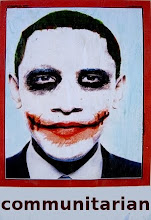
I've got several projects going and one of them is a new article explaining how communitarianism has replaced all the opposing political sides. I keep finding articles that say almost the same thing as I'm saying, except they won't tell us exactly what the sides changed into. Here's Arianna Huffington telling us on July 14, 2008 to quit forcing everyone to look at American politics from the tired old left v right divide. She explains why she gave Obama seven tips to

"staying true to the vision and message that took him from longshot 'unlikely candidate' to presidential frontrunner" -- and why the first one was that he should "load up his Kindle with passages from leaders who were looking to fundamentally change the country and following an inner compass, not the latest focus-group results." It's why I reminded him of the words of Dr. King: "There comes a time when one must take the position that is neither safe nor politic nor popular, but he must do it because conscience tells him it is right." http://www.huffingtonpost.com/arianna-huffington/the-latest-media-blind-sp_b_112740.html
What was the "vision and the message" that took Obama from longshot to frontrunner? Why can't Arianna tell us why Amitai Etzioni already bought the champagne for his election night celebration? Why can't she tell us that to "fundamentally change the country" means a complete overhaul of U.S. constitutional law and every state constitution (except for Alaska's; passed in 1959, it's already, fundamentally, a communitarian contract). Arianna can only tell us enough to keep us confused and in the dialectic, while her enlightened understanding allows her to see beyond it; she knows why the masses are not ready to know what these changes will bring. She includes Etzioni's blog posts at her site, this proves to me she knows what the synthesis is. The following Etzioni article and the comments show why he is the king of Talmudic arguments: http://www.huffingtonpost.com/amitai-etzioni/small-lies-big-lies-and_b_73341.html

Etzioni is very, very interested in regulating the internet. I bet he already knows all about the case law established after Australian hate crimes were prosecuted in 2002, as seen in this article from the Australian Peter Myers' elist. I don't know what the Adelaide Institute was, but I recognise it and may have linked to it once from the ACL, along with over 10,000 other exit links. Does the Toben ruling mean I am liable under Australian hate crime laws for everything I quote that was written on all 10,000 exit links I link to? Can the entire ACL website be considered "one document?" How long before I need to concern myself with this nonsense?

Majorie Hines at Kent Law had a few choice words about Etzioni's legal theories in 2004:

http://209.85.141.104/search?q=cache:3DKQq0HaOLgJ:lawreview.kentlaw.edu/articles/79-1/Heins.pdf+etzioni+internet+crime&hl=en&ct=clnk&cd=7&gl=us&client=firefox-a

(9) HREOC ruling, ERA submission, online “hate speech” - Jeremy Jones vs Frederick Toben

Online Hate Speech and Section 18C of the Australian Racial Discrimination Act 1975

Electronic Frontiers Australia

Submission {to the Human Rights and Equal Opportunity Commission, the court which administers “hate speech” laws}

26 July 2002

http://www.efa.org.au/Publish/hreocsubm2002.html

This is a submission to HREOC's Background Paper for the Cyber-Racism Symposium 2002.

Principles

EFA is a member of the Global Internet Liberty Campaign (GILC), a worldwide alliance of online civil liberties groups, and our position on this issue is that of a GILC resolution on hate speech:

(1) GILC members deplore racist and hateful speech; but when encountering racist or hateful speech, the best remedy to be applied is generally more speech, not enforced silence.

(2) Liberty's fundamental principle is that governments should be prohibited from prohibiting the expression of an idea simply because society finds the idea itself offensive or disagreeable.

(3) While the application of existing law to the Internet is still in its infancy, the well-established free speech principles should apply with even greater force to networked speech. The Internet gives it users easy access to public discourse. It affords human rights activists and other opponents of racism with an inexpensive and effective method for responding to racist speech.

Article 18 of the Universal Declaration of Human Rights states:

Everyone has the right to freedom of thought, conscience and religion; this right includes freedom to change his religion or belief, and freedom, either alone or in community with others and in public or private, to manifest his religion or belief in teaching, practice, worship and observance.

and Article 19 states:

Everyone has the right to freedom of opinion and expression; this right includes freedom to hold opinions without interference and to seek, receive and impart information and ideas through any media and regardless of frontiers.

Section 18C of the Racial Discrimination Act refers to acts "reasonably likely, in all the circumstances, to offend, insult, humiliate or intimidate another person or a group of people". It is our contention that putting material on a web site is not likely to offend, insult, humiliate or intimidate anyone unless they desire to be so offended.

While open web sites are certainly not "private", they are public in a rather different fashion to radio or television broadcasts, since the web is a "pull" medium rather than a "push" one. In particular, they are not intrusive: web sites do not appear on computer screens unbidden; one must choose to view a web site, taking affirmative action to do so. (The delivery of offensive material in unsolicited email - as "spam" - would be a different matter.) Most individual web sites also reach a relatively restricted audience. The best analogy for the web is therefore printed books, not the broadcast media: the Internet can be considered "a constellation of printing presses and bookstores" (Sex, Laws, and Cyberspace, Henry Holt 1997).

The Internet also allows for the easy expression of a great diversity of viewpoints, including corrections to misleading or inaccurate information.

Practical Problems

There has been one ruling by HREOC applying section 18C of the Racial Discrimination Act 1975 (RDA) to online hate speech, in the case Jeremy Jones versus Frederick Toben. The problems with this ruling illustrate general problems with the application of "hate speech" laws to the Internet.

Many of the problems with racial vilification legislation extend from traditional media to the Internet. But the Internet also poses new problems.

Content Granularity

Can one sentence on a web site make the entire site "hate speech"?

The manifest problems inherent on treating a whole site as a single document are apparent if we consider Jones v Toben. The plaintiff in that case argued that "the Adelaide Institute website should be considered as a single document" and HREOC accepted that in its ruling, which ordered that the entire Adelaide Institute website be "removed from the world wide web" and made no attempt to distinguish its parts.

The problem with this is that only a fraction of the content on the Adelaide Institute web site could conceivably be considered in breach of the RDA. Among other material, the site includes (or at some point included - see below) copies of articles from leading Australian and international newspapers, press releases and other statements from a range of organisations (including both EFA and HREOC), and statements by opponents. Perhaps more to the point, the site is used by Toben to voice his opinions on matters of all kinds: to take just one example, he has reprinted on it another person's criticisms of the Jubilee 2000 campaign (for debt relief for poor countries).

This is of particular concern because Toben was required by the ruling to promise not to publish "any such material" in the future and to remove from publication "all such material", without elaborating in any way on "such". As a result the HREOC ruling effectively orders Toben to remain silent completely - taking the example above again, it prima facie enjoins him not to express anywhere in public, ever again, opposition to debt relief for poor countries.

The decision to treat the web site as a single document also runs in the face of precedents set with other legislation. The Australian Broadcasting Authority, in its management of the Broadcasting Services Act (Online Services Amendment), treats individual web pages as separate documents. Take-down notices, which serve a similar purpose to the HREOC ruling in ordering the removal of online content, are specific to particular web pages, rather than covering entire sites. ...

References

Global Internet Liberty Campaign (GILC) resolution on hate speech:
http://www.gilc.org/speech/un/gilc-hate-speech.html

Jeremy Jones versus Frederick Toben
http://scaleplus.law.gov.au/html/rdadec/0/2000/0/RD000130.htm

ACLU v. Reno, 1997
http://www.aclu.org/court/
renovacludec.html