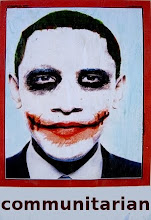
Showing posts with label Institute for Communitarian Policy Studies. Show all posts

Sunday, April 10, 2011

Eight year old ACL blog posts recovered by Nordica

It's springtime in Alaska and it's been a busy month for this crazy winter camper. I've finally decided that as long as there are still utilities available to our civilization, then I want them all! Of course I still choose to live in a Gertee. I am going to start designing and building them with plumbed floors for drains and hose attachments for clean water. I found a spot in Wasilla right on the Parks, and once again I will be tearing the 20' down and moving it to a new home/retail location. But unlike the Chitina fiasco last summer, this spot has VISITOR TRAFFIC, electric, water, sewer, laundry, playgrounds and wireless! Over the summer I'm going to make a documentary of how I locate and get donations for all the materials to build new Gertees.

I'm grateful to have tried living a most primitive lifestyle while still being provided for within the infrastructure around me. After all these years of this trial, I'm fairly certain that 80% of the Americans I hear talking about how they plan to survive "off grid" or in the "wilderness" are in for a very rude awakening.

Nordica is finishing up a lot of the things that went on hold because of our new baby Tomas, and most importantly she's almost finished with the revision of 2020/TACM! She recently sent me a few of my old blog posts from the very first ACL website. They're filled with all kinds of interesting bits of information that are still relevant to current events. Like this one:

posted by Niki on Tuesday, April 08, 2003 [ 0 comments ]

Peter Myers forwarded author Bruce Murphy's April 5, 2003 "Kristol's Weekly Standard leads the way."

Murphy's article focuses on the men, the money, and the newspapers behind the influence over the U.S.- Iraq war. He tells us DC is buzzing in reaction to less than favorable worldwide reports regarding the New American Century group's neoconservative influence over Bush Jr. Murphy's article (a version was published in the Millwaukee Journal Sentinal) led me down an interesting path.

Murphy tells us,

[begin quote] "Under Joyce, the Bradley Foundation made 15 grants totaling nearly $1.9 million to the New Citizenship Project Inc., a group Kristol led and which also created the Project for a New American Century, a key proponent of a more aggressive U.S. foreign policy. The foundation also is a significant funding source for the American Enterprise Institute, a Washington, D.C., think tank with many neoconservative scholars." [endquote]

Sources at Media Transparency provide us with the grant data matrix for the New Citizenship Project, which was also called "The Bradley Project on Citizenship and the New Century." Back in the mid 1990's, at the same time "liberals" like Clinton and Gore were creating the National Partnership for Reinventing Government, the New Citizenship Project funded research for the hazily defined "Projects to restore self-government and civil society."

The New Citizenship Project funded important research into the causes and prevention of crime, and they funded start-up for the Council on Crime. All of these projects fit nicely into United Nations' Local Agenda 21, the 1992 Rio blueprint for nationwide efforts to rebuild the world into communitarian civil societies.

The John M. Olin Foundation, listed by Media Transparency as a heavy contributor to The Project for A New American Century, was also the primary funder ($227,500.00) of Ronald Radosh's fellowship grant while he was at The Institute for Communitarian Studies, at George Washington University, DC. Radosh is the former communist turned conservative who needed a total of $277, 500 in grants to write the book, "Commies; A Journey Through the Old Left, the New Left and the Leftover Left."

Just a quick perusal of his articles posted at FrontPage Magazine.com is enough to show an observant student of the dialectic how creative (and well funded) the communitarians are.

Monday, October 11, 2010

"It's payback time" from the Institute for Communitarian Policy Studies

Posters on forums repeatedly suggest I've coined a new word to describe my political beliefs. Just because people have never once heard the term used, they assume nobody else has either.

My letter to the tea party is getting some wild and unsubstantiated rebuttal comments. Maybe I should have directly quoted Etzioni in my letter, but I was trying to make it an easier read. I did not submit it to Alex Jones, but now that it's there I'm learning a lot more about my enemies. :)

Here's the latest "news" from our communitarian guru and his more moral Israeli institute dedicated to merging the U.S. under communitarian global norms. Notice how everything they do is called "new"... now there's even a "new normal" and who better to define what that means than Dr. Amitai Etzioni... the "everything expert" :

The Institute for Communitarian Policy Studies has produced two articles recently that may be of interest to you. The first published at CNN.com (http://articles.cnn.com/2010-10-04/opinion/etzioni.new.normal_1_pursuits-payback-time-esteem?_s=PM:OPINION) encourages Americans to pursue non-material goals so they can be happier even in tough economic times.

The second piece, at The New Republic (http://www.tnr.com/article/politics/78250/private-security-virtual-strip-search)
defends the use of full-body scanners at airport security screenings.

Are Americans Ready for the New Normal?
October 04, 2010 | By Amitai Etzioni, Special to CNN.com

When I asked an audience, "Do you really need a flat-screen TV? An inflatable Santa Claus? Plastic pink flamingos on your front lawn?" they chuckled with agreement. However, when I added, "A 4G phone?" the room went awfully silent.

The bigger question is: Will Americans learn to live with -- better yet, find -- some new sources of contentment, in the austerity many millions will face for years to come, or will they continue to be sharply disappointed that they have to make do with less? With less when it comes to material goods, that is.

I wish I could send them all a copy of the writing of Abraham Maslow. Maslow pointed out that human needs are organized in a hierarchy. At the bottom are basic needs for food, shelter, clothing and other such essentials (the physiological and safety needs, in Maslow's terms).

Once these needs are sated, psychologically healthy people pay more mind to their social needs, to being loved and loving, to being appreciated and appreciating. And as these higher needs are fulfilled, these good people turn to "self-actualization," to spiritual and transcendental pursuits -- to the pinnacle of human needs.

There is nothing wrong about people who have few resources focusing on satisfying their basic needs. A problem only arises when, as people's income grows -- as it did for the last several decades -- they continue to buy stuff, instead of spending more time in the pursuit of serving their higher needs.

It is the subject of scores of movies, plays and novels: The man feels he did all he should by bringing home oodles of money, which allowed the family to buy a larger house, the latest appliances and so on -- and the family is frustrated because the man has no time for his spouse or kids.

In the social science lingo, people are conditioned to buy objects to express affection (as captured in the commercial tag lines "promise her anything, but give her Arpège" and "diamonds are a girl's best friend") and measure their esteem by the size of their bank account. If Maslow is correct, there is no true happiness down this road, and people ought to be liberated from the use of goods to buy affection and esteem.

The Great Recession provides a golden opportunity to test Maslow's prescription. As most everybody has read by now, we lived beyond our means for decades, and we borrowed about all we could from overseas and indebted our children. It's payback time.


Private Security
In defense of the 'virtual strip-search.'
October 9, 2010 | Amitai Etzioni for The New Republic

If you've passed through a major American airport in the past few months, you may have been subjected to a full-body scan. The new backscatter and millimeter-wave sensing devices that have been deployed across the country check whether people hide forbidden objects under their clothes. Privacy advocates refer to them as "virtual strip-searches." But how worried should one be about these scanners? Are they truly a grave threat to individual privacy, as civil libertarians contend?

I come at this issue as a communitarian. This philosophy, about which I have written extensively, holds that our public-policy decisions must balance two core values: Our commitment to individual rights and our commitment to the common good. Neither is a priori privileged. Thus, when threatened by the lethal SARS virus, we demanded that
contagious people stay home—even though this limited their freedom to assemble and travel—because the contribution to the common good was high and the intrusion limited. Yet we banned the trading of medical records because these trades constituted a severe intrusion, but had no socially redeeming merit. (For more discussion, see The New Golden Rule.) Viewed through this lens, I must say that the case against these scanners is deeply unconvincing.

The actual threat to privacy posed by these scanners has been inflated using sensationalistic imagery. In order to illustrate how intrusive this "strip-search" is, civil liberties advocates often display a rather graphic image obtained from a scanner. Yet they neglect to mention that the image is not of an airline passenger but of a TSA employee who volunteered to test the machine. (After all, if someone is willing to expose themselves, especially for a good cause, we have little reason to object.) Moreover, as you can see, the images of passengers that actually appear on TSA screens are a far cry from the one circulated by civil liberties advocates, because the scanners are equipped with two kinds of privacy filters. One conceals the genitals and the other the face. (What's more, new scanner software replaces the realistic images of the passengers who are being scanned with a cartoon of a generic, clothed body, and marks areas that should be checked further. This software is currently being tested.) Further preserving privacy, TSA staffers who view the images are in a separate room and are unaware of the identity of the passenger who is screened.

True, when we deal with millions of travelers, day in and day out, someone somewhere will cross the line. Thus, civil libertarians make much of the fact that a scanner in use in a Florida courthouse had stored over 35,000 images (although there is no evidence that anybody dispersed these images to people not authorized to review them). Yet efforts to flag such incidents should not distract us from the essential fact that these privacy violations are exceedingly rare and not necessarily damaging.

To wit, there is virtually no evidence that body scanners have actually harmed Americans. Indeed, civil liberties advocates generally do a poor job of explaining precisely what kind of harm the scanners are supposed to cause. "Libertarians may contend that the new security measures have a “chilling effect” on people beyond those directly affected. However, there is little evidence of this effect, and it is hard to explain what exactly it means in concrete terms. Do fewer people fly because of the scanners—even when dealing with short distances, where there are ready alternatives such as the Acela and rental cars?

The ACLU further asserts that the scanners amount to “a significant assault on the essential dignity of passengers” but provides no concrete evidence to this effect. On the contrary, the people whose dignity is supposedly being assaulted do not feel that way : A January 2010 CBS News poll found that roughly three out of four Americans (74 percent) think airports should use full-body x-ray scanners because “they provide a detailed check for hidden weapons and explosives and reduce the need for physical searches.” Who should we trust to judge what does or doesn't threaten a passenger's dignity? Civil liberties activists, or the passengers themselves? As the public is well aware, being unable to fly without fear of being bombed out of the sky assaults people, and not just their dignity.

Most important, civil liberties advocates also ignore the fact that people who subject themselves to body scans do it voluntarily. They are free to choose a pat-down rather than pass through the millimeter-wave machine, and even then about 70 percent of Americans say they prefer to be scanned. (The option of choosing a pat-down should not be considered unduly coercive, since random pat-downs were mandatory even before the installation of body scanners—and civil libertarians cannot seriously argue that there should be no scrutiny at all.) Even a strong libertarian should agree that if one consents to a search, especially when there is a ready alternative, there is no room for challenges. All of these facts suggest that the main libertarian criticisms against body scanners are simply not credible.

Finally, there is the core question of proportionality and context. The real issue at hand is what experience scanners provide to most people, mostof the time, how frequent exceptional violations of privacy are, and what remedies are in place. The Electronic Privacy Information Center (EPIC), in its critique of scanners, states that new security measures “present privacy and security risks to air travelers because they might create data files directly linked to the identity of air travelers. These files, if retained, could provide the basis for a database of air traveler profiles.” (Emphases mine.) The New Republic's Jeffrey Rosen argues that "the greatest privacy concern is that the images may later leak.” Other privacy advocates hold that the radiation involved may harm one’s health. Yet these concerns—almost entirely hypothetical—pale in comparison to the possibility that terrorists might bring down more airplanes, or worse.

And, in their core mission of deterring terrorists, the body scanners cannot help but work. The ACLU argues that, “It is far from clear that body scanners would have detected the ‘anatomically congruent’ explosives [Christmas Day bomber Umar Farouk Abdulmutallab] hid in his underwear.” And, it says, “some experts have said explosives can be hidden by being molded against the human body, or in folds of skin, and British newspapers are reporting that government testing in the UK found that the technology comes up short in detecting plastic, chemicals and liquids.” But this type of argument—the same type that the ACLU applies to nearly every security measure—is a bait and switch. It does not answer the question of how much security the scanners add.

Simply put, security effectiveness does not require 100 percent success, just a significant increase in the detection capability of the measures in place. In this way, the millimeter-wave devices narrow the opportunities for terrorists, add ways in which they can be detected, increase the probability that they will make an error, and reduce their confidence—as well as the confidence of those who employ them.

When all is said and done, we must vigilantly protect our rights, but we must also be concerned about our security. The spirit of this approach is embodied in the Fourth Amendment, which does not ban all searches—only unreasonable ones. And the searches that body scanners perform are reasonable, if we keep in mind the fact that terrorists are far from done, and that our nation has a vital interest in protecting not just rights but also lives.


For more information, check out our new website at icps.gwu.edu.

The Institute for Communitarian Policy Studies
The George Washington University
1922 F St. NW, Rm. 413
Washington, DC 20052
ph: 202.994.8190
fax: 202.994.1606
Twitter: @AmitaiEtzioni
Visit our electronic archives at http://dspace.wrlc.org/handle/1961/137
Maybe Etzioni should have included the fact that he already redefined "reasonable" for us?