Showing posts with label Pope John Paul II. Show all posts

Monday, September 28, 2015

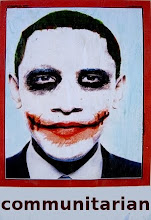
The New World Pope is a Communitarian


Had a few more major glitches in our publishing endeavors, lost a lot of data in a laptop crash and almost all my hard bound library books with all my margin notes, but things are settling down finally and I'm back on track with rewriting the Gertee How-to book and The Green Virgin.  

It's been interesting to see how many major media sources have identified Pope Francis as a communitarian in their coverage of his world tour. Even as politicians are claiming to be communitarians, the American public remains mostly in the dark about what it is. 

Made a new video called Communitarianism and Global Citizenship, posted on youtube and Liveleak. Youtube pulled the audio within an hour, and liveleak pulled the entire video and permanently banned me from their website. This inspires me to make more videos. I may also make The Green Virgin into a full length documentary film rather than a book. It's no secret that Americans would rather watch than read. And for some reason, after all these years and the trouble it's brought us, I still feel inspired to expose the lie.  https://www.youtube.com/user/Alaskatentlady/videos

Just a few samples of what's been published recently:
Pope Francis Criticizes 'Unfettered Pursuit of Money,' Calls for 'Communitarian' Response
http://www.newsweek.com/pope-francis-criticizes-unfettered-pursuit-money-bolivia-speech-352259
Why Pope Francis’s climate message is so hard for some Americans to swallow

"On Tuesday, Governor Andrew Cuomo, a political force de Blasio has had limited success marshalling to his advantage, spoke of Pope Francis. "In some ways, ironically, the pope's message isn't even religious. It is so universal that it is just humanitarian. It's communitarian," Cuomo told NY1's Zack Fink. "

In Pope Francis, De Blasio Finds Ultimate Validator by Ben Max, Sep 24, 2015


“I’ve been a Republican and I’ve been a Democrat,” Christopulos says. “Now I’m a communitarian.”
As Wealth Inequality Soars, One City Shows the Way

Sunday, January 31, 2010

Catholic Social Teaching: A communitarian democratic capitalism for the new world order

Still studying the Catholic contributions to communitarian thinking. Martin opened my eyes to the importance of understanding Pope John Paul II and Vatican II. These other writers assure me this is a fairly open and well hashed out topic within the modern Catholic community. Will that make it more difficult for me to discuss political communitarianism with someone who has tied the political to the religious already; will it mean I am challenging their religion if I oppose it?

Catholic Social Teaching: A communitarian democratic capitalism for the new world order, by Oliver F. Williams1
(1) University of Notre Dame, 46556 Notre Dame, Indiana, USA

Abstract Catholic Social Teaching has taken a remarkable turn with the May 1991 document on economic ethics, Centesimus Annus. During their one hundred year history, church documents were notable for their courageous championing of the rights of the least advantaged; they were much less distinguished for their understanding of how markets and incentives function in capitalism. Most business leaders admired church teaching for its compassion but had little respect for its competence. With this most recent document, however, there is a growing conviction that the church may have come of age in economic ethics. Even the Wall Street Journal has celebrated Centesimus Annus. The article outlines the highlights of the document and its points of continuity with the tradition. Responses from business and the academy are also briefly considered.

Oliver F. Williams is a member of the faculty and serves as Associate Provost of the University of Notre Dame. A Catholic priest, Father Williams has a doctorate and other degrees in theology and chemical engineering. He has published and lectured extensively in the field of business ethics.
This article includes an updated version of some material previously published. For more elaboration on the history of Catholic social teaching, see articles by Williams, O. F. in Houck, J. W. and Williams, O. F. (eds.): 1984,Catholic Social Teaching and the U.S. Economy: Working Papers for a Bishops'' Pastoral (University Press of America, Washington, DC) and in Williams, O. F. and Houck, J. (eds.): 1982,The Judeo-Christian Vision and the Modern Corporation (University of Notre Dame Press, Notre Dame, IN).
http://www.springerlink.com/content/n89m583132416421/
Other sources that tie the economy to religious communitarianism:

Communitarian Liberalism in Support of an Equitable Global Economy, by John E. Kelly, Ph.D., Philosophy, Canisius College, 2001 Main Street, Buffalo, NY 14208, Sources include "Relevant modern papal social encyclicals beginning with Pope Leo XIII’s Rerum Novarum up to Pope John Paul II’s Centesimus Annus (100thRerum Novarum)." http://iaes.confex.com/iaes/Rome_67/techprogram/P2804.HTM

A Communitarian Model of Business: A Natural-Law Perspective
by Surendra Arjoon

This article compares and contrasts a communitarian view of business with business models under the liberalist and socialist doctrines. Specifically, it attempts to define a communitarian view that is based on natural-law principles. The communitarian view represents the proper balance and order between the claims of liberal and socialist views, and provides assistance to private initiative, while at the same time correcting its abuses and respecting its rights. The theoretical framework developed in this article utilizes a metaethical approach in specifying the underlying philosophical assumptions about rationality, primary purpose, basic unit, supreme value, market characteristics, dynamics of market regulatory mechanism, and juridical order. Today, there is need for a new humanism based on an integral view of the human person. Natural-law communitarianism recaptures the metaphysical certitude of the human person and thereby provides a philosophy of authentic human development. By its very nature, it defines the business organization that incorporates its social purposes.
http://www.acton.org/publications/mandm/mandm_article_24.php
The communitarian third way: Alexandre Marc's ordre nouveau, 1930-2000
By John Hellman

Ordre Nouveau's "neither right nor left" movement, based on personalism and revolutionary federalism, helped shape modern Catholic political culture in France, the National Revolution instituted by the Vichy regime, the post-war European movement, and the contemporary European New Right. It influenced European youth exchanges, veterans' organizations, trade unions, religious groups, artists, and architects, even the executive of the French national railway system. In The Communitarian Third Way John Hellman introduces us to the non-conformist Alexandre Marc, a Russian Jew who became a Christian convert and full-time professional revolutionary.Marc helped Le Corbusier launch Plans, imported the existential philosophy of Husserl and Heidegger to France, helped Mounier start Esprit, and was an important force in revitalizing traditional French Catholic political culture. Hellman uses interviews, unpublished correspondence, and diaries to situate Marc and the Ordre Nouveau group in the context of the French, German, and Belgian political culture of that time and explains the degree to which the ON group succeeded in institutionalizing their new order under Pétain. Hellman also examines their post-war legacy, represented by Alain de Benoist and the contemporary European New Right, shedding new light on the linkages between early national socialism and the political culture of Charles de Gaulle, François Mitterrand, and pioneers of the post World War II European movement.
http://books.google.com/books?id=FktLgT8B2yQC&dq=pope+john+paul+communitarian&source=gbs_navlinks_s
On Catholic Communitarianism
by Dominic A. Aquila


Although communitarianism commends itself as a third way between the free market and the welfare state, its relentless attack on the former makes it difficult to dissociate it from welfare state socialism. The Catholic version of it is hardly any different. Father Hollenbach proposes “a communitarian reconstruction” of “the classical liberal understanding of human rights” by refounding it on “the traditional natural-law conviction that the human person is an essentially social being.” His great hope is to transform the prevailing liberal understanding of rights as “fenceposts” that protect one’s “turf” from intruders, into “claims” that “specify the minimum standards for what it means to treat people as members of the community.” Father Hollenbach points to the United States Bishops’ Pastoral Letter on the American economy, Economic Justice for All (1986), as an example of the communitarianism he has in mind.
http://www.acton.org/publications/randl/rl_review_154.php

The rest of these citations are not Catholic


On Confucian communitarianism

Hu Weixi 1 Contact Information
(1) Department of Philosophy, Tsinghua University, Beijing, 100084, China

Abstract As a social and political thought, communitarian ideas appeared in the Pre-Qin Confucianism. By the Song Dynasty, it had become a systematic theory, namely, the learning of the “four books.” As a social and political theory, not only can Confucian communitarianism contribute to Western liberalism, but it can also be an intellectual resource for the development of democracy in East Asian countries and regions. The future of the Confucian communitarianism lies in its critique of itself and its discourse with Western liberalism, by which Confucianism evolves from communitarianism into liberalism.
http://www.springerlink.com/content/lw383565t412m738/

Shaming punishments and communitarianism, the kamakazi model

Orin Kerr has here effectively jumped into today's debate over shaming punishments (basics here). Orin terrifically explains my communitarian-based grounds for suggesting that shaming punishments may actually honor and strengthen human dignity:

Don't [shaming punishments] rely on, and ultimately reinforce, the notion that the offender is a valued member of the community? It seems to me that the offender feels shame precisely because he values his position in the community. Thus judges hand down such punishments only when they think the offender values his position and will want to restore it to its earlier status. In that sense, then, shaming punishments are not about dehumanization, but about hope and community: the punishment is based on and recognizes the hope that the offender will feel a strong enough connection to the community that he will feel shamed, and that the community will value that person's connection to the community enough to react to the offender.

Along these lines, consider this Wikipedia entry on Crime in Japan which notes here the theory that "an important factor keeping crime low [in Japan] is the traditional emphasis on the individual as a member of groups to which he or she must not bring shame."
http://sentencing.typepad.com/sentencing_law_and_policy/2006/10/shaming_punishm.html

From Liberalism to Communitarianism: The Erosion of Individual Rights in the Irish Criminal Process? by Liz Campbell, University of Aberdeen - Law School,July 25, 2007
Law and Society in the 21st Century, Humboldt University, Berlin, Germany
Abstract:
Traditionally, the central concern in the Irish criminal process was the accused person, as is evidenced in the matrix of due process rights which developed to protect him against the might of the State and to safeguard him from unfair conviction. However, in recent years it seems that there has been a shift in discourse and policy away from liberal concerns about the primacy of the individual towards an approach in which the interests and demands of the community and the wider public are prioritised. Contemporary political rhetoric in Ireland often presents the community as an entity with an entitlement to protection from harm, and developments in the criminal process are increasingly justified by invoking the rights of the community, to the detriment of individual liberties.

This paper explores a number of measures which encapsulate this trend. Firstly, the right to bail was restricted in 1996, so as to prevent further offending, and this was based on the perceived need for public protection, notwithstanding the effects on individual liberties. Also, the introduction of behaviour orders under the Criminal Justice Act 2006 was legitimated by the need to protect the public from anti-social behaviour. When exploring such legislative developments which indicate the growing import accorded to the community in the criminal process, this paper will examine the threat that the adoption of elements of communitarianism poses to individual rights. Furthermore, the perception that the interests of the community and those of the suspect are fundamentally at odds will be challenged, and the importance of the limitation on State powers will be emphasised.
http://papers.ssrn.com/sol3/papers.cfm?abstract_id=1162134

Rastafari: Roots and Ideology (Utopianism and Communitarianism)
http://www.wikio.com/books/rastafari-roots-and-ideology-utopianism-and-communitarianism-0815602960-1544893,b.html

Ubuntu and communitarianism in media ethics
Clifford G. Christians

A robust and visionary media ethics depends on the normative theory in which it is rooted. Two such paradigms have grown up independently—ubuntu in Africa and communitarianism in Europe and North America. For both, the community is ontologically prior to persons. They serve as an antidote to mainstream libertarianism. Ubuntu as a universal idea solidifies dialogic communitarianism and keeps it oriented intellectually. Ubuntu’s total focus on humans and its insistence on the moral dimension of society produce an ubuntu communitarianism that is the most mature version of any to date. As a normative paradigm for media ethics, ubuntu communitarianism emphasises authentic disclosure for news and moral literacy as the media’s mission. Its liberatory journalism empowers citizens to come to agreement about social problems and solutions among themselves rather than depending on the political elite or professional experts.
http://ajs.uwpress.org/cgi/content/short/25/2/235

Communitarianism vs. Individual Rights In the West and the Islamic World
David Lea, Dr. Lea is an associate professor of philosophy at the American University of Sharjah, the United Arab Emirates.
In the 1980s, however, these arguments came into question. A powerful "communitarian" or "culturist" movement began to gain force and stress the value of the community.3 These academics questioned the liberal tendency to articulate principles of justice based on the "bi-polarity" of the individual, on the one hand, and the state, on the other. They argued that justice must go beyond the idea of equal rights for all citizens and provide special rights for communities and cultural groupings so that these cultural groups could survive and endure the overwhelming threats to their traditions.
http://www.mepc.org/journal_vol12/0506_lea.asp
Utopian and Communitarian Movements
The Oxford Companion to United States History | 2001 | Paul S. Boyer |
Traditional cloistered Roman Catholic orders, introduced to America by Augustinian monks who reached Philadelphia in the 1790s, and perpetuated in the twentieth century by Trappists, Benedictines, and other orders, represented a different form of the communitarian vision. So, too, did colonies embracing Spiritualism or Theosophy; gender‐based settlements such as the Women's Commonwealth in Texas and Washington, D.C. (1874–1906), and ashrams established by Asian‐influenced mystics in Massachusetts and California in the 1920s. In the Depression‐wracked 1930s, Catholic renewalists started a communitarian religious retreat, “The Grail,” in Ohio; conservative Protestants founded communities in Texas and Arkansas to promote fundamentalist religious beliefs; and radical Jews formed socialist colonies in Michigan.
http://www.encyclopedia.com/doc/1O119-UtopianandCommuntrnMvmnts.html
Monday, 8:30 am add on -
If the American founders were really freemasons as many Lodges claim to be true, then is it just as possible they were also secretly communitarians, as Bill Clinton and Amitai Etzioni insist? Was Thomas Jefferson aware of the dialectical divide between materialism and spiritualism? Did he understand the synthesis and the conflicts necessary to move it to final conclusion? What does it mean to take the side of materialism when following in the steps of Jesus Christ? How perfectly Jefferson's Bible plays into Pope John Paul's assessment of the Soviet and American systems.

In The Jefferson Bible: The Life and Morals of Jesus, Jefferson describes his views of Jesus Christ, the Christian religion, and his own religious beliefs. In a Syllabus which he appended to his Bible, he compared the teachings of Jesus to those of the earlier Greek and Roman philosophers, and to the religion of the Jews of Jesus' time. The following excerpt is from a letter discussing the Syllabus. Of significance is his statement, "...(Jesus) preaches the efficacy of repentance towards forgiveness of sin; I require counterpoise of good works to redeem it..."

"But while this syllabus is meant to place the character of Jesus in its true and high light, as no impostor Himself, but a great Reformer of the Hebrew code of religion, it is not to be understood that I am with Him in all His doctrines. I am a Materialist; he takes the side of Spiritualism; he preaches the efficacy of repentance towards forgiveness of sin; I require counterpoise of good works to redeem it, etc., etc. It is the innocence of His character, the purity and sublimity of His moral precepts, the eloquence of His inculcations, the beauty of the apologues in which He conveys them, that I so much admire; sometimes, indeed, needing indulgence to eastern hyperbolism. My eulogies, too, may be founded on a postulate which all may not be ready to grant. Among the sayings and discourses imputed to Him by His biographers, I find many passages of fine imagination, correct morality, and of the most lovely benevolence; and others, again, of so much ignorance, so much absurdity, so much untruth, charlatanism and imposture, as to pronounce it impossible that such contradictions should have proceeded from the same Being. I separate, therefore, the gold from the dross; restore to Him the former, and leave the latter to the stupidity of some, and roguery of others of His disciples. Of this band of dupes and impostors, Paul was the great Coryphaeus, and first corruptor of the doctrines of Jesus. These palpable interpolations and falsifications of His doctrines, led me to try to sift them apart. I found the work obvious and easy, and that His past composed the most beautiful morsel of morality which has been given to us by man. The syllabus is therefore of His doctrines, not all of mine. I read them as I do those of other ancient and modern moralists, with a mixture of approbation and dissent..." (6) {emphasis added by me}
http://watch.pair.com/mason.html
What actual role, if any, did Freemasonry play in setting up the political-religious divide between Republicans and Democrats? How far back does the penetration by the Masons-Luciferians-Marxists of the Vatican go? Were there open Iluminists in the American constitutional groups prior to 1775? Did the enlightenment serve only to further the divide? What role did the Protestant churches really play in the global divisions? Is there an authentic divide between the material and the transcendent sides of human existence? What if this is but a piece of an elaborate plot to transform the entire world into a global empire in the 21st century?

One thing's for sure, there is nothing normal about the progress of the divide between Christians and Christians, Christians and Muslims, and Catholics and Catholics; it did not evolve naturally.

Sunday, December 27, 2009

The Keys of This Blood, by Malachi Martin

Fred's ready for winter fun now!

I received a copy of this book from one of my readers for Christmas:

The Keys of This Blood: The Struggle for World Dominion between Pope John Paul II, Mikhail Gorbachev, and the Capitalist West
, Simon and Schuster, New York, 1990, ISBN 0671691740
by Malachi Martin, a former Jesuit Priest who left the Vatican to become a writer in NYC.

I'm learning a lot about Roman Catholic traditions and beliefs from this book. I didn't know anything about the Keys to Christ's Church coming from Simon Peter and being passed down 265 times and all that. In the past couple years I've been learning a bit here and there from my Catholic neighbors, they still act like they believe in Christ even though they left their church over the 501 tax exempt status issue, they couldn't go along with the way that changed sacred marriage vows into something other than what they believe in. We've had more than one all night conversation and it's really helped me. I'm one of those former Lutherans who barely understand the church I was baptized in, let alone anybody elses. About all I remembered was Catholic church adornments and rituals were somehow an affront to God. Religion played no role in the choices I made in my early adult life, and I married a former alter boy in 1988. I had no problem pre-agreeing and promising a Priest to allow our blood children to be raised Catholic.

At first my husbands' Irish Catholic family automatically assumed I would convert, and I did consider it, right up until I realized my future husband had no belief in anything Christlike that I could recognize. When we divorced 4 years later, I put a serious blot on their family records (and they have never forgiven me for it). I allowed him to raise our son, but only if he promised to provide him with a good education. My Marine was in a private Catholic school for 12 years.

So the point is, I have a personal interest in understanding the Catholic church as well as an ACL interest. I always assumed it was good at it's core because I wanted to believe that. Now I'd like to know what my son believes in without exposing the role it plays in the new world order, but that's beyond impossible. A big part of me avoided this piece because I already saw the huge role the Pope played in introducing the world to communitarianism. It was a Jesuit Priest whose words validated our ACL thesis, and I just did not want to insult my son's faith. I never wanted to insult anyone's faith, but especially not the spiritual or religious beliefs of my children.

This book is a real eye opener. I'm about 200 pages into it and wishing I'd have grabbed a pen and marked off all the places where Martin explains away the dialectical tensions between what Pope John Paul called the Capitalist West and the Soviet East. He even spends a couple pages teaching us about Hegel and how the dialectic worked to establish Marxist communism. (It's the first time I've read anything about Marx's involvement with the Satanic church so that was news to me.) But, so far anyway, Martin has not once explained that the "tension" between the US and USSR was also a dialectical drama. He does not call the Pope's amazing grasp of the global need for a spiritual synthesis between capitalism and communism anything but God inspired wisdom that only the Pope could possibly understand. He describes Gorbachev's arrival on the scene as practically divine intervention in worldy affairs, and curiously leaves out any of the British or Israeli contributions to the emerging supranational authority he otherwise describes in detail. How is it possible that a Priest-writer-Vatican insider did not know that communitarianism is the synthesis between capitalism and communism, when Pope John Paul himself explained it?

And in discussing this, how is it possible to leave out Israleli IDF Amitai Etzioni's Kabbalistic sociological theory of communitarianism? It was published at the exact same time the Pope published it, and Etzioni's Talmudic version agrees with the Pope's Catholic NT version 100%.
"Pope John Paul's great vision of communitarianism and a New Global Order has yet to receive the recognition it deserves in furthering the understanding that humanity is built on religious values, without which transformations in totalitarian regimes would have been impossible. The essence of communitarianism, as put forth by the Vatican, consists of seeking middle ground between Marxist collectivism and rigid individualism and capitalism. Phillips traces the history of communitarianism through Aristotelian and Judeo-Christian writings, clarifying the proper function of the community in helping individuals help themselves by mobilizing church resources and countering anti-religious movements such as Nazism and communism. Communitarianism presents an encouraging universal notion of freedom, transcending the one-sided stances of Marxism and libertarian capitalism and promoting the vision of a unified human destiny." Communitarianism, the Vatican, and the New Global Order by Robert L. Phillips, Carnegie Council.org. {Added to our Dialectic research Oct 6, 2005}, www.cceia.org/resources/journal/05
(I got several comments last month when I posted this quote here, and more than one chastized me for using the term Judeo-Christian in my title. I was repeating its use from the above passage, which apparently none of those commentors read.)

Martin spends a lot of time on Gorbachev, the USSR, and Soviet beliefs too, but again, no mention at all of Amitai Etzioni's collaboration with Gorbachev to set forth many details of the new world order, including the Catholic Church's exact same economic theory of communitarianism. According to Martin, the Pope somehow knew there would be a new world government structure introduced in 1992. That it did happen in 1992 (LA21) should be at least some indication that the name for the final, more enlightened synthesis between East and West existed before Pope John Paul, Gorbachev, and Bush all declared simultaneously that there was an immediate need for a new communitarian world order. Of course the fact that they called it that is rarely mentioned, and true to form, I see no references to communitarianism anywhere in this book, but maybe it's buried somewhere. I'll read the whole book just to find out. :)

I'll write more later about Martin's book after I finish it, because there are some freaky similarities to the stuff I've been reading on our local community league websites. The word enlightenment is used by all of them. He lays out how the church was undergoing a huge inside rebellion in the heirarchy and how the Pope wouldn't stop it. Martin has also written of how the church was infiltrated by Satanists (http://www.tldm.org/news/martin.htm). I'm extremely curious to learn where he's leading me with The Keys to This Blood.

Maybe it was just because I was reading it on Christmas, but the story of the Pope going to Poland made me cry. It made me cry all that much harder as the realization of what he was actually doing there sunk in. I found myself wishing the Pope was an authenic representative of Christ on earth... that there was somebody like that who wasn't part and parcel connected to the whole scam against humanity. The need for a "Savior of mankind" is so much a part of what I believed in as a youth that it still lives deep in my heart. The thought of all those Poles and slavs in the Eastern bloc being tricked was like a knife in my chest. How is it possible I still grieve?