Showing posts with label Israeli Settlers. Show all posts

Wednesday, December 8, 2010

1948 UN Land Management Plan for British Palestine

We've been in Wasilla for a week waiting for Nordica's baby to arrive, and I've been learning a lot from our host family. They know the Palins so I've got a different perspective on Sarah and her children, plus I've watched 2 episodes of Sarah's TV series on Alaska. Regardless of her politics, both shows seem to me to be an accurate portrayal of hunting and fishing up here. I was surprised to see her shoot and miss several times before she got her boo; it was a very different picture of her being a "Great White Hunter" the media portrayed. It's been kind of nice to see her family from a friendly view after reading so much about her being a witch and a Monarch slave. This whole Monarch butterfly programming aspect is so freaky it's easy to discount it as b.s., until you watch a Lady Gaga video or Tupac singing about Kill the Illumiatti. I'm learning a bunch of wild stuff and some of it is utterly fascinating, like Oak Island Treasure.

It's hard to find the truth about people we know personally, let alone people who play in the spotlight. I don't feel like I "know" who Sarah Palin is just because I saw her on TV or gossiped with her neighbors; it still bothers me that so many of my countrymen think that's all it takes. If she runs for president in 2012 I think I'll stick to researching her ties to Community Policing and Community Development, because her association with Rebuilding Community was the one thing nobody in the country seemed to ask or care about. Where does Sarah Palin stand on Local Agenda 21 and the Judaic Law Institute? If I run into her at the grocery store I'll ask her.

Our host dad is one of my former bosses who's shared many ideas for improving my rustic lifestyle since we all met (and he's the one who taught me to use my chainsaw!). The mom is a beautiful Christian who walks the talk. Besides being a generous and supportive hostess, she has really helped me to understand why so many Christians support Zionism and Israel. In her view she thinks Christians don't look any further than "the Jews deserve a home "and they worship the same God. Like me, she never heard of the Talmud in her entire life and she certainly never heard that our government is replacing US Constitutional Law with Talmudic Law. Our talks will help me with the new introduction to 2020, which is going to be late... just like our baby.

From Peter Myers:
(14) Survey of Palestine refutes "land without people" myth. Palestinians made the desert bloom

The Real Bloomers of Palestine

Antoine Raffoul

October 27, 2010

http://www.uruknet.de/?s1=1&p=71231&s2=28

1948 Lest We Forget has obtained a copy of the full Survey of Palestine (Including the map survey) for its records. The following outline extracts shed more light on the Zionist lies about Palestine being "a land without people…." We recommend that Survey to all our Supporters.

Antoine Raffoul
Coordinator
1948: LEST WE FORGET
http://www.1948.org.uk

In December 1945 and January 1946, the British Mandate authorities carried out an extensive survey of Palestine , in support of the work of the United Nations Special Committee on Palestine. The results were published in the Survey of Palestine, which has been scanned and made available online by Palestine Remembered; all 1300 pages can be read here.

One of the subjects investigated in the Survey of Palestine is land use; specifically, which crops were Palestine's leading agricultural products at the end of the British Mandate, and whose farms were producing them.

So, according to the Survey of Palestine, who really made the barley fields of Beersheba bloom?

The British government survey found that in 1944-45 Palestinian farmers produced approximately 210,000 tons of grain.

About 193,400 tons of that grain were cultivated on Palestinian farms; about 16,600 tons were cultivated on Jewish farms. ...

The British government survey found that in 1944-45 Palestinian farmers produced approximately 143,000 tons of melons.

About 136,000 tons of those melons were cultivated on Palestinian farms; a little over 7,000 tons were cultivated on Jewish farms. ...

The British government survey found that in 1944-45 Palestinian farmers produced approximately 1,683 tons of tobacco, on 28,169 dunams of land. Virtually all the land under tobacco cultivation was Palestinian.

Who made the vineyards of Hebron bloom?

The British government survey found that in 1944-45 Palestines farmers produced approximately 40-50,000 tons of grapes, and between 3-4 million litres of wine. About 86% of the land that produced these products was owned and cultivated by Palestinians. ...

The British government survey found that in 1944-45 Palestinian farmers produced approximately 79,000 tons of olives.

About 78,000 tons of those olives were cultivated on Palestinian farms; a little over 1,000 tons were cultivated on Jewish farms. ...

The British government survey found that in 1944-45 Palestinian farmers produced approximately 8,000 tons of bananas.

About 60% of the land that produced these bananas was owned and cultivated by Palestinians. ...

The British government survey found that in 1944-45 Palestines farmers produced approximately 245,000 tons of vegetables.

About 189,000 tons of those vegetables were cultivated by Palestinian farmers; about 56,000 tons were cultivated by Jewish farmers. ...

So, on the eve of the partition resolution, in which the United Nations proposed to allocate 55 percent of the land to Jewish Palestine (including those parts that produced most of Palestine's leading crops, with the sole exception of the olive crop), and 45% to Arab Palestine, Palestinian Arabs were producing:

92% of Palestine grain
86% of its grapes
99% of its olives
77 % of its vegetables
95% of its melons
more than 99% of its tobacco
and 60% of its bananas.

Palestine's agricultural produce at that time had an annual value of approximately 21.8 million pounds sterling; 17.1 million of which was produced by Arab cultivation, and 4.7 million by Jewish cultivation. (as seen in below table). ...

So, who made the desert bloom? The Palestinians made the desert bloom.

Photos: All the photographs of Palestinian farmers cultivating their crops in Palestine under the British Mandate are from Before Their Diaspora: A Photographic History Of The Palestinians 1876 – 1948, by Walid Khalidi.

Tuesday, January 20, 2009

'Tungsten bombs' leave Israel's victims with mystery wounds

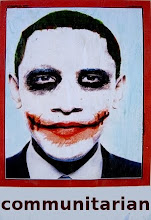
It's been a difficult 3 weeks reading the death tolls and damage reports coming in about the Israeli attack on Gaza. It's beyond frustrating to know there's not a single thing I can do to stop the killing. There's not a single thing I can do about any of the communitarian's madness and wars, and now it looks like things are taking a slightly different twist from the one I kept seeing them trying out in public.

The Communitarian UN needs a way to bolster their global reputation and authority. The elected leader of an influential "democratic" nation has to be sacrificed for the global common good. Activist organizations working for the UN made it appear (to me anyway) that they wanted Bush Jr. to fulfill that role. My focus has been on the IC case against the US government (or the many cases I should say). But, yes, going after Israel makes a lot more sense. Why would the Btitish Zionists bring down the US government when they finally control it? After a century of infiltration of the US system, there is no longer any doubt who pulls the strings in the White House these days. (No matter what you hear about Obama, he was LED by the nose through the community activist ranks by committed Communitarians; check the public records and compare his speeches to the writings of Dr. Amitai Etzioni, his real guru.) So now Barry Chamish's insistance that the Jewish people who settled Israel are being set up to become victims for the globalist CFR is certainly worth reading again.

From Peter Myer's elist:
(1) 'Tungsten bombs' leave Israel's victims with mystery wounds

From: Kenneth Rasmusson <rasken@kulturservern.se> Date: 19.01.2009 05:52 AM

http://www.independent.co.uk/news/world/middle-east/tungsten-bombs-leave-israels-victims-with-mystery-wounds-1418910.html

18 January 2009

'Tungsten bombs' leave Israel's victims with mystery wounds


As it declares a unilateral ceasefire, Jerusalem faces a UN call for a war crimes investigation

by Raymond Whitaker

Israel was facing demands for war crimes investigations as it declared a unilateral ceasefire in Gaza last night after a 22-day assault in which more than 1,200 Palestinians, a third of them children, were killed and 13 Israelis died.

Two children were killed yesterday when Israeli tanks shelled a UN school in which families were sheltering, leading a UN spokesman, Chris Gunness, to say: "There has to be an investigation to determine whether a war crime has been committed." The call was dismissed by an Israeli foreign ministry spokesman, Yigal Palmor, who said: "These claims of war crimes are not supported by the slightest piece of evidence." But among numerous allegations of disproportionate use of force, questions are also multiplying about the use of unconventional weapons by Israel, including a new type of bomb that causes injuries that doctors have not seen before, and which they find impossible to treat.

The Israeli Prime Minister, Ehud Olmert, claimed in a televised address last night that the military operation had "fully attained" its goals, "and beyond". Israel had declared the ceasefire in response to an appeal from the Egyptian President, Hosni Mubarak, but troops would remain for now in Gaza, and Hamas would be "surprised again" if it attacked.

But even though Mr Olmert said Hamas had been "beaten badly", rockets landed in Israel a few minutes before he spoke. Despite the desperate state of Gaza's population, Hamas leaders said they would continue to fight for an end to Israel's closure of crossing points into the territory and a withdrawal of the Israeli forces.

Mr Mubarak invited the Palestinian President, Mahmoud Abbas, and the French President, Nicolas Sarkozy, to discuss Gaza in Sharm el-Sheikh today. The UN Secretary-General, Ban Ki-moon, said he might attend, and Gordon Brown is among other leaders due to take part.

Although Mr Olmert's announcement was only a first step towards halting the conflict in Gaza, the UN is not the only international body insisting that inquiries must be held as soon as possible into the tactics and weapons used by Israel. Erik Fosse, a Norwegian doctor who worked in Gaza's hospitals during the conflict, said that Israel was using so-called Dime (dense inert metal explosive) bombs designed to produce an intense explosion in a small space. The bombs are packed with tungsten powder, which has the effect of shrapnel but often dissolves in human tissue, making it difficult to discover the cause of injuries.

Dr Fosse said he had seen a number of patients with extensive injuries to their lower bodies. "It was as if they had stepped on a mine, but there was no shrapnel in the wounds," he said. "Some had lost their legs. It looked as though they had been sliced off. I have been to war zones for 30 years, but I have never seen such injuries before." However, the injuries matched photographs and descriptions in medical literature of the effects of Dime bombs.

"All the patients I saw had been hit by bombs fired from unmanned drones," said Dr Fosse, head of the Norwegian Aid Committee. "The bomb hit the ground near them and exploded." His colleague, Mads Gilbert, accused Israel of using the territory as a testing ground for a new, "extremely nasty" type of explosive. "This is a new generation of small explosive that detonates with extreme power and dissipates its power within a range of five to 10 metres," he said.

According to military databases, Dime bombs are intended for use where conventional weapons might kill or injure bystanders – to kill combatants in a house, for example, without harming people next door. Instead of being made from metal, which sprays shrapnel across a wide area, the casing is carbon fibre. Part of the motive for developing the bombs was to replace the use of depleted uranium, but Dr Fosse said the cancer risk from tungsten powde was well known. "These patients should be followed up to see if there are any carcinogenic effects," he said.

While the loudest controversy has been over accusations that white phosphorus was illegally used, other foreign doctors working in Gaza have reported injuries they cannot explain. Professor Mohammed Sayed Khalifa, a cardiac consultant from Sudan, said that two of his patients had had uncontrollable bleeding. "One had a chest operation, and continued bleeding even after having been given large quantities of plasma," he said. "The other had what seemed to be a minor leg injury, but collapsed with profuse bleeding. Something was interfering with the clotting process. I have never seen such a thing before."

Dr Ahmed Almi, an Egyptian cardio-thoracic consultant at al-Nasser hospital in Khan Younis in southern Gaza, said he had seen a number of patients with inexplicable injuries. A boy of 14 had a small puncture wound in his head, but extensive damage to his brain, making it impossible to save his life. "I don't know the nature or type of these weapons that make a very small [entry wound] and go on and make massive destruction in the tissues," he said.

Israeli military representatives have refused to confirm or deny using specific weapons, but insist that all Israel's weapons comply with international law. Neither white phosphorus nor Dime bombs are illegal, but campaigners say the way they have been used, especially in Gaza's densely packed urban areas, could constitute a war crime.

Monday, December 29, 2008

Community vs. Democracy: Communitarian Theories and the Israeli Settlers

As an American who knows virtually nothing about Israeli politics or struggles, this paper provided me with a rare, brief glimpse into the Settlers' war against the Israeli state and the Arab Palestinians. It's also interesting that the "father" of American Communitarianism was a German born immigrant raised and trained as a soldier in an Israeli kibbutz settlement, yet his input into the "moral dialogue" is not included in this paper. This paper focuses on Taylor and MacIntyre and neglects to mention Martin Buber, the Israeli philosopher who coined the modern terms for moral communitarianism and then taught it to his pupils, including Amitai Etzioni.
Community vs. Democracy: Communitarian Theories and the Israeli Settlers Prepared for delivery at the 2003 Annual Meeting of the American Political Science Association, August 28 - August 31, 2003. Copyright by the American Political Science Association. presented by Avia Pasternak, MA The Department of Political Science, The Hebrew University of Jerusalem ## email not listed ##

The communitarian critique of liberal thought, which defied the liberal conception of the autonomous subject and the neutrality of the liberal political sphere, attracted much criticism for its vagueness in what regards the practical implications of communitarian politics. More specifically, critics of communitarianism argue that communitarian philosophers, when shaping their proposed political model around a rather obscure definition of the community, do not consider the possibility that ‘ communities’ may have some negative implications as well, if they impede individual autonomy. Accordingly, these philosophers fail to provide a sufficient explanation as to how the political models they propose can be disassociated from anti-democratic communities. 1 This paper aims at reinforcing such a critique on communitarian thought by comparing the communitarian theory with the praxis of an actual community. Focusing on the thought of Charles Taylor and Alasdair MacIntyre it strives to show that there are distinct similarities between these philosophers’ ontological premises and those of the Israeli Settlers, 2 and that such similarities raise doubts as to level of {2} compatibility between the political solutions suggested by Taylor and MacIntyre and the modern democratic order. The paper begins by analyzing Taylor’s and MacIntyre’s ontological premises and argues that their critiques of liberal thought rest on a similar perception of the modern subject, which consists of two competing manifestations: the Atomist-Self and the Communitarian-Self. Both philosophers condemn the image of the Atomist- Self and the moral neutrality of the liberal political sphere it leads to. They argue that in order to assist the Communitarian-Self in overcoming her deficient rival, modern politics ought to reintroduce fundamental moral questions to the life of the modern individual, and thus reawaken her communitarian qualities. Nevertheless, albeit Taylor and MacIntyre argue that the political remedies they offer will solve the malaise of modern political order, namely its lack of democratic participation, I argue that these political remedies can in fact have some anti- democratic implications as well, when applied to reality. However, since neither philosopher discloses with clarity what real-world communities accommodate his theoretical conjectures, the paper proceeds to examine Taylor’s and MacIntyre’s conjectures by juxtaposing them with the Israeli Settlers’ worldview. This comparison is conducted through a text analysis of the Settlers’ periodical Nekudah. It focuses on the year 1995, in which many of the Settlers openly defied the democratic order in Israel, a defiance which reached its tragic culmination with the assassination of Prime Minister Yitzhak Rabin. Thus, by comparing the Settlers’ ontological premises to those of Taylor and MacIntyre, the paper discloses the distinct similarity between the communitarian dual image of the subject and the Settlers’ portrayal of the self. However, contrary to MacIntyre’s and Taylor’s predictions, the Settlers draw some {3} clearly anti-democratic conclusions from these very premises, thus attesting to the anti-democratic potential embedded in the communitarian image of the self.

1 Buchanan Allen, "Assessing the Communitarian Critique of Liberalism” Ethics, 98(3), 867; Phillips Derek, Looking Backward (Princeton: Princeton University Press, 1993), 7-8; Holmes Stephan, The Anatomy of Anti-Liberalism (Cambridge, Mass.: Harvard University Press, 1993), 178.

2 The Israeli Settlers are Israeli-Jews who reside in settlements in the occupied territories (Gaza Strip and the West Bank). They are motivated by a strong religious ideology, claiming that the settling of the biblical Land of Israel is a divine commandment; and hence they strongly object any territorial concessions to the Palestinians.

(From pages 14 and 15): The Settlers’ ideology originates in the political and theological premises of their founding movement, Gush Emunim (The Block of the Faithful). In a nutshell, Gush Emunim was the offspring of Rabbi A.Y. Kook’s Religious Zionism, which composed a unique dialectic combination between Zionism and Judaism, claiming that Zionism and the establishment of the State of Israel signified the first stage of the heavenly redemption of the Jewish People. 60 Rabbi Kook’s son, Zvi Yehuda, gave a more radical and material tone to his father’s metaphysical teachings, placing special emphasis on the sanctity of the Land of Israel and preaching for the retrieval of all the ancient Jewish biblical land-patrimonies, then under Egyptian and Jordanian rule. The Israeli dazzling victory of the Six-Days 1967 War, which resulted in the occupation of Eastern-Jerusalem, Sinai, Gaza and the West Bank, conferred a prophetic validity to his preachings. This henceforward led to the establishment of Gush Emunim, whose declared purpose was to hasten the redemption of Israel, via the settling of the Promised Land. 62 Gush Emunim’s principal guidelines were, mainly, the belief in the sanctity of the Land of Israel, the People of Israel and the Torah (Pentateuch); the belief that our age, that of the unification of Israel with its Land, is the age of Messianic redemption; the perceiving of the State of Israel as a sanctified manifestation of Jewish sovereignty over the Land of Israel; and a total refusal to discuss territorial concessions to the Palestinians, together with the denial of Palestinian rights over the land. More generally, Gush Emunim viewed itself as the natural heir of secular Zionism, which had lost its momentum due to its secular flaws.

(Page 25) Yehuda Etzion’s Hai Vekayam 'identity card' reads: "Even 120 Knesset members – as well as elections or referenda – cannot change the People’s truth. The Land is a bequest for the people and its generations. It is a trust in our hands, which one generation does not have the authority to desert and destroy", quoted in: Sprinzak, Brother Against Brother 224. Etzion is a convicted member of the Jewish Underground, which committed terror acts against Palestinians and planned to blow-up the Mosques on Temple Mount in 1984.

Read the whole paper at http://www.allacademic.com//meta/p_mla_apa_research_citation/0/6/3/6/0/pages63600/p63600-1.php

Thursday, November 27, 2008

Community vs. Democracy: Communitarian Theories and the Israeli Settlers

Community vs. Democracy Communitarian Theories and the Israeli Settlers , Prepared for delivery at the 2003 Annual Meeting of the American Political Science Association, August 28 - August 31, 2003. Copyright by the American Political Science Association. presented by Avia Pasternak, MA The Department of Political Science, The Hebrew University of Jerusalem

Abstract

"The communitarian critique of liberal thought, which defied the liberal conception of the autonomous subject and the neutrality of the liberal political sphere, attracted much criticism for its vagueness in what regards the practical implications of communitarian politics. More specifically, critics of communitarianism argue that communitarian philosophers, when shaping their proposed political model around a rather obscure definition of the community, do not consider the possibility that ‘ communities’ may have some negative implications as well, if they impede individual autonomy. Accordingly, these philosophers fail to provide a sufficient explanation as to how the political models they propose can be disassociated from anti-democratic communities. 1 This paper aims at reinforcing such a critique on communitarian thought by comparing the communitarian theory with the praxis of an actual community. Focusing on the thought of Charles Taylor and Alasdair MacIntyre it strives to show that there are distinct similarities between these philosophers’ ontological premises and those of the Israeli Settlers, 2 and that such similarities raise doubts as to level of 1 Buchanan Allen, "Assessing the Communitarian Critique of Liberalism” Ethics, 98(3), 867; Phillips Derek, Looking Backward (Princeton: Princeton University Press, 1993), 7-8; Holmes Stephan, The Anatomy of Anti-Liberalism (Cambridge, Mass.: Harvard University Press, 1993), 178. 2 The Israeli Settlers are Israeli-Jews who reside in settlements in the occupied territories (Gaza Strip and the West Bank). They are motivated by a strong religious ideology, claiming that the settling of the biblical Land of Israel is a divine commandment; and hence they strongly object any territorial concessions to the Palestinians."
http://www.allacademic.com//meta/p_mla_apa_research_citation/0/6/3/6/0/pages63600/p63600-1.php