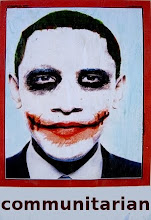
As most of my regular readers know, I do not support or endorse either progressives or conservatives. I can't; I identify all modern "sides" in political debates as potential tools that can be used to help bring on the final Hegelian synthesis, called communitarianism. But that doesn't mean I can't find and use valuable research produced by every "side." And, for what it's worth, the progressive left, in my opinion, usually comes the closest to seeing through the globalists' Hegelian ruse. Richard C. Cook is a great example of this. These monetary and historical banking concepts are the KEY to understanding why the Plan is so successful. We learned very early on in our ACL research that if we didn't study the banking system then we couldn't possibly understand the globalist's plans.
So we spent years trying to understand why the economic system decided upon by President Washington and Alexander Hamilton, i.e "The American System" is so obscured or, if mentioned, scorned and ridiculed. A. Hamilton is accused of having ties to European banks and discarded as an "imperialist," yet Thomas Jefferson (the father of "democracy" who introduced the two-party system) is the one who appointed Swiss banker and eugenicist Albert Gallatin as Secretary of the Treasury. It was Jefferson's Vice-President, Aaron Burr who killed Hamilton in a "duel," for reasons that still remain unknown to us. What's more, the only political party that appears to understand Friedrich List (The National System of Political Economy) and the American system are the communist inspired cult followers called LaRouche Democrats.
Will there ever be a history lesson on American economics that isn't influenced by party propaganda? What was the original American system, and is it even remotely possible we can retrieve it before our entire system collapses? Why was it so important to destroy our National Banking system only to replace it with the private corporation called the Federal Reserve?
From Blackheath Books via Peter Myer's elist:
The 2008 Presidential Election: Concepts Progressives Must Know About
Monetary Policy and History
by Richard C. Cook
http://www.globalresearch.ca/index.php?context=va&aid=7613
Global Research, December 14, 2007
highlights:
* The main justification for laissez-faire economics is the unsupported assertion found in Adam Smith’s Wealth of Nations that a hidden hand—“Hand, the Invisible”—will benefit the common welfare if individuals within the economic system pursue their own individual interests. This fallacy is the basis of so-called “classical” or “liberal” economics and is also a part of the ideology of the conservative branch of the Republican Party and the theology of its fundamentalist constituency. It is reflected in the view of the “Austrian School” of economics and was the basis for the monetarist policies of the 1970s and the “Reagan Revolution” of the 1980s. It has been disproved countless times by progressive economists. The main problem is that money in a complex economy is so easily manipulated by insiders.
* Opposing laissez-faire economics was what was called in the nineteenth century the “American System.” This was based on Renaissance ideas of nationalism, reflected in Europe by the German and Italian cameralists, who said that the central government had the right and obligation to regulate economic and financial affairs for the benefit of the nation. The most cogent expression of these views was Emmerich Vattel’s The Law of Nations, used as a manual of government at the First Continental Congress in 1775. The New Deal, which created the modern American physical economy until it was wrecked by the Federal Reserve-induced recession of 1979-83 and the “Reagan Revolution,” was a modern expression of the American System.
* The American System was based on actions by government to direct investment into infrastructure development, including health and education. This included government purchase of shares in development corporations and direct funding of projects through tax revenues and
government borrowing.
* During the early to mid-19th century, the American System was funded at the state level of government and saw the building of canals and railroads, improvement of waterways and harbors, turnpikes, etc. The federal government first became involved with infrastructure through the Army Corps of Engineers, then, during the Civil War, with the building of the transcontinental railroad and funding of land-grant colleges. The American System was copied in Germany, Japan, China, and Russia and elsewhere around the world. It was viewed as completely contrary to the British imperialist model.
* The American System as manifested through the New Deal saw the TVA, WPA, CCC, Hoover Dam, funding of school and hospital construction, public water and sewer systems, municipal gas and electric systems, rural electrification, etc. More recent examples were the interstate highway system, R&D investment, the manned space program, and creation of the internet. Today there are no more such projects serving as economic drivers for the U.S.
So if the American System developed by Hamiliton and Washington was viewed as "completely contrary to the British imperialist model," then what was Jefferson's system?
So we spent years trying to understand why the economic system decided upon by President Washington and Alexander Hamilton, i.e "The American System" is so obscured or, if mentioned, scorned and ridiculed. A. Hamilton is accused of having ties to European banks and discarded as an "imperialist," yet Thomas Jefferson (the father of "democracy" who introduced the two-party system) is the one who appointed Swiss banker and eugenicist Albert Gallatin as Secretary of the Treasury. It was Jefferson's Vice-President, Aaron Burr who killed Hamilton in a "duel," for reasons that still remain unknown to us. What's more, the only political party that appears to understand Friedrich List (The National System of Political Economy) and the American system are the communist inspired cult followers called LaRouche Democrats.
Will there ever be a history lesson on American economics that isn't influenced by party propaganda? What was the original American system, and is it even remotely possible we can retrieve it before our entire system collapses? Why was it so important to destroy our National Banking system only to replace it with the private corporation called the Federal Reserve?
From Blackheath Books via Peter Myer's elist:
The 2008 Presidential Election: Concepts Progressives Must Know About
Monetary Policy and History
by Richard C. Cook
http://www.globalresearch.ca/index.php?context=va&aid=7613
Global Research, December 14, 2007
highlights:
* The main justification for laissez-faire economics is the unsupported assertion found in Adam Smith’s Wealth of Nations that a hidden hand—“Hand, the Invisible”—will benefit the common welfare if individuals within the economic system pursue their own individual interests. This fallacy is the basis of so-called “classical” or “liberal” economics and is also a part of the ideology of the conservative branch of the Republican Party and the theology of its fundamentalist constituency. It is reflected in the view of the “Austrian School” of economics and was the basis for the monetarist policies of the 1970s and the “Reagan Revolution” of the 1980s. It has been disproved countless times by progressive economists. The main problem is that money in a complex economy is so easily manipulated by insiders.
* Opposing laissez-faire economics was what was called in the nineteenth century the “American System.” This was based on Renaissance ideas of nationalism, reflected in Europe by the German and Italian cameralists, who said that the central government had the right and obligation to regulate economic and financial affairs for the benefit of the nation. The most cogent expression of these views was Emmerich Vattel’s The Law of Nations, used as a manual of government at the First Continental Congress in 1775. The New Deal, which created the modern American physical economy until it was wrecked by the Federal Reserve-induced recession of 1979-83 and the “Reagan Revolution,” was a modern expression of the American System.
* The American System was based on actions by government to direct investment into infrastructure development, including health and education. This included government purchase of shares in development corporations and direct funding of projects through tax revenues and
government borrowing.
* During the early to mid-19th century, the American System was funded at the state level of government and saw the building of canals and railroads, improvement of waterways and harbors, turnpikes, etc. The federal government first became involved with infrastructure through the Army Corps of Engineers, then, during the Civil War, with the building of the transcontinental railroad and funding of land-grant colleges. The American System was copied in Germany, Japan, China, and Russia and elsewhere around the world. It was viewed as completely contrary to the British imperialist model.
* The American System as manifested through the New Deal saw the TVA, WPA, CCC, Hoover Dam, funding of school and hospital construction, public water and sewer systems, municipal gas and electric systems, rural electrification, etc. More recent examples were the interstate highway system, R&D investment, the manned space program, and creation of the internet. Today there are no more such projects serving as economic drivers for the U.S.
So if the American System developed by Hamiliton and Washington was viewed as "completely contrary to the British imperialist model," then what was Jefferson's system?